
Herbal Teas
Ophiopogon & Dendrobium Tea (Maidong Shihu Cha)
Ophiopogon & Dendrobium Tea is a classic yin-nourishing and stomach-harmonizing medicinal tea. Ophiopogon root is sweet and slightly bitter, slightly cold in nature, entering the Heart, Lung, and Stomach meridians, known for nourishing yin, generating fluids, moistening the lungs, and clearing the heart. Dendrobium stem is sweet in taste, slightly cold in nature, entering the Stomach and Kidney meridians, known for benefiting the stomach, generating fluids, nourishing yin, and clearing heat. Combined with green tea to clear the heart and relieve irritability, this tea achieves the effects of nourishing yin, harmonizing the stomach, regulating qi, and generating fluids. The tea is refreshing and mellow, especially suitable for those with chronic gastritis due to stomach yin deficiency.
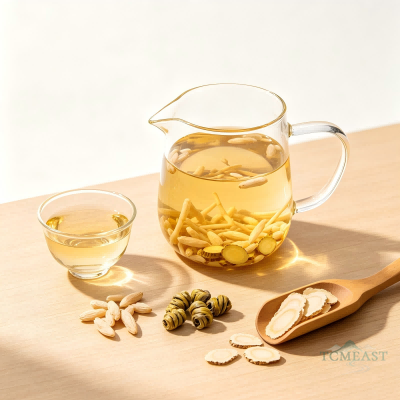
Main Ingredients
- Ophiopogon root (Maidong) 10g
- Dendrobium stem (Shihu) 6g
- Green tea 3g
Steps
Grind 10g of Ophiopogon root and 6g of Dendrobium stem into powder together.
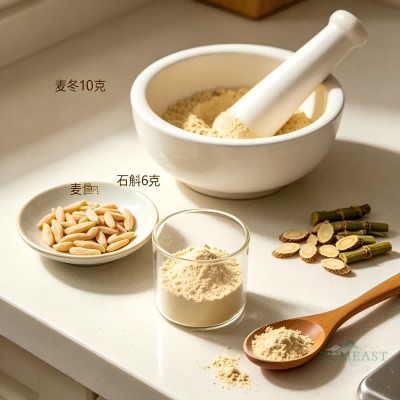
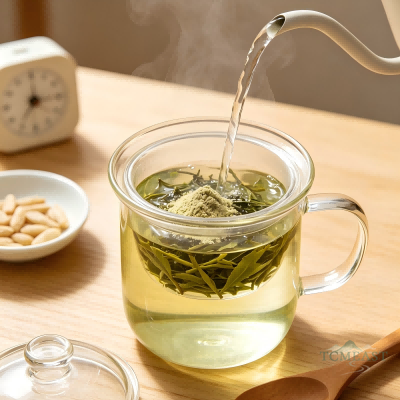
Put the powdered herbs and 3g of green tea into a large cup. Pour boiling water over the ingredients. Cover and steep for 10 minutes. Drink frequently as tea. Can be re-brewed 3-5 times.
TCM Notes
Ophiopogon Root (Maidong) : Sweet and slightly bitter, slightly cold in nature; enters the Heart, Lung, and Stomach meridians. Known for nourishing yin, generating fluids, moistening the lungs, and clearing the heart. Used for dry cough due to lung dryness, dry mouth and throat, stomach pain with hunger but no desire to eat, nausea, and constipation caused by stomach yin deficiency with heat. Dendrobium Stem (Shihu) : Sweet in taste, slightly cold in nature; enters the Stomach and Kidney meridians. Known for benefiting the stomach, generating fluids, nourishing yin, and clearing heat. Used for fluid depletion, dry mouth and thirst, poor appetite with dry heaving, and post-illness deficiency heat. Research shows it enhances the gastric mucosal barrier and promotes gastric juice secretion, with good effects on atrophic and superficial gastritis. Green Tea: Bitter and cold in nature; known for clearing the heart, relieving irritability, generating fluids, quenching thirst, and aiding digestion. Synergistic Effect: Together, they achieve the effects of nourishing yin, clearing heat, benefiting the stomach, generating fluids, and relieving irritability.
Suitable for:Those with chronic gastritis due to stomach yin deficiency (symptoms include dull stomach pain, hunger without desire to eat, dry mouth and throat, dry stools, and abdominal distension) Especially suitable for those with stomach dryness Those with dry cough due to lung dryness or consumptive cough Those with dry mouth, thirst, and fluid deficiency Those who stay up late frequently or consume excessive alcohol and tobacco
Not suitable for:Those with Spleen-Stomach Cold Deficiency – cold intolerance, prone to diarrhea, or sensitive to cold should avoid Those with external excess heat – avoid Those with spleen deficiency and diarrhea – Dendrobium is rich and both herbs are cold in nature, which may damage stomach yang and worsen diarrhea and abdominal pain Those with weak constitution – use with caution Pregnant women – use with caution; the cold nature may damage the spleen and stomach Infants and young children – use with caution; digestive systems are not fully developed Those with phlegm-dampness in the stomach – not suitable Those with colds or fever – pause consumption