
Herbal Teas
Honeysuckle Tea (Jinyinhua Cha / Shuanghua Cha)
Honeysuckle Tea is a classic heat-clearing medicinal tea with a long history in Traditional Chinese Medicine. Honeysuckle, also known as Lonicera flower or "double flower" (Shuanghua), was first recorded in the Han Dynasty Shennong Bencao Jing, and its name originates from the Compendium of Materia Medica. The Compendium of Materia Medica records that honeysuckle can treat "all wind-dampness conditions, as well as various swellings, toxins, carbuncles, and skin diseases". The Supplement to the Compendium of Materia Medica describes it as "fragrant and sweet". Honeysuckle has long been regarded as a superior remedy for clearing heat and detoxifying. Honeysuckle is sweet in taste and cold in nature, entering the Lung, Heart, and Stomach meridians. It has the effects of clearing heat and detoxifying, dispersing wind-heat, and reducing swelling and dispersing nodules. Brewed as a tea, it can be used as adjunctive therapy for early-stage wind-heat colds, warm diseases with fever, sore throat, red and swollen eyes, and carbuncles. Modern research shows that honeysuckle has anti-inflammatory, antioxidant, lipid-lowering, blood sugar-lowering, and antiviral effects. This tea is especially suitable for summer heat or early-stage wind-heat colds, making it an ideal daily wellness tea for clearing heat and relieving summer heat.
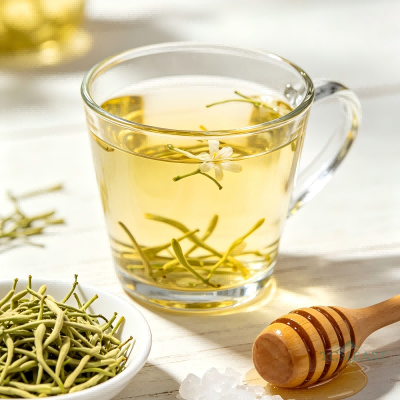
Main Ingredients
- Dried honeysuckle flowers (Jinyinhua) 10g
- Boiling water approx. 300ml
- Rock sugar or honey to taste
Steps
Take 5-10g of dried honeysuckle. Rinse quickly with clean water to remove surface dust. If using packaged herbs, rinsing may be omitted.
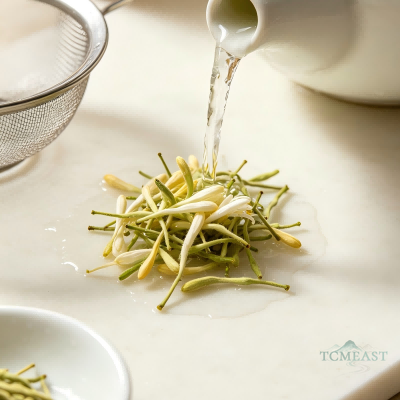
Put the rinsed honeysuckle into a teacup or teapot. Pour about 300ml of freshly boiled water over the honeysuckle. Honeysuckle should be brewed with water above 90°C to release active compounds like chlorogenic acid. Cover and steep for 5-10 minutes. Do not use warm water or re-brew repeatedly.
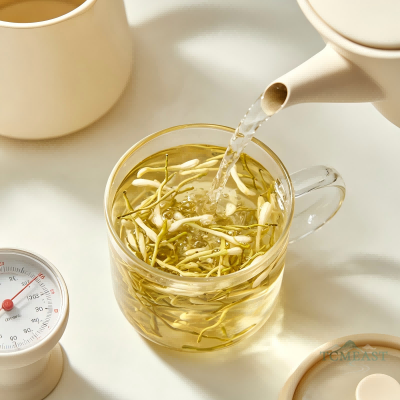
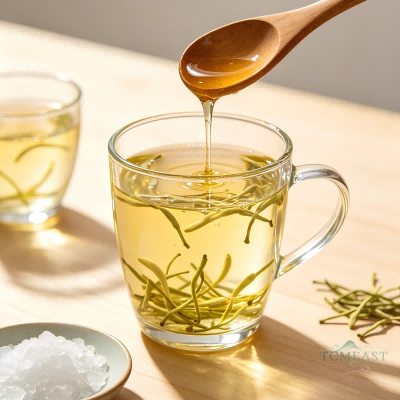
Add a small amount of rock sugar or honey to taste if desired. Consume 1-2 times daily, drinking frequently as tea. Note: Continuous use should not exceed one week.
TCM Notes
Honeysuckle (Jinyinhua) : Sweet in taste, cold in nature; enters the Lung, Heart, and Stomach meridians. Known for clearing heat and detoxifying, dispersing wind-heat, and reducing swelling and dispersing nodules. Used for warm diseases with fever, heat-toxin ulcers, wind-heat colds, sore throat, and carbuncles. Modern pharmacology shows honeysuckle is rich in volatile oils, organic acids (including chlorogenic acid), flavonoids, and triterpenoid saponins. Honeysuckle polysaccharides have antioxidant, anti-inflammatory, immunomodulatory, antiviral, and blood sugar/lipid-lowering effects. Modern research also confirms its anti-UV damage and liver-protective effects. Characteristics: The tea contains virtually no calories and is rich in chlorogenic acid, luteolin glycosides, and other active compounds – a heat-clearing medicinal tea.
Suitable for:Those with early-stage wind-heat colds or warm diseases (fever, slight chills, headache, sore throat, cough, thirst) Those with sore throat and tonsillitis Those with red, swollen, or painful eyes Those with summer heat and thirst Those with carbuncles, sores, and heat-toxin ulcers Those with hyperlipidemia and hypertension (adjunctive therapy) Those with obesity General population for summer heat relief and wellness
Not suitable for:Those with Spleen-Stomach Cold Deficiency – honeysuckle is cold in nature; those who are prone to diarrhea and cold hands/feet should not consume it in large amounts over a long period Pregnant women – absolutely contraindicated. Pregnant women have sensitive spleen-stomach function; the cold nature of honeysuckle may damage spleen-stomach yang, causing abdominal pain and diarrhea, and may mildly stimulate the uterus, increasing the risk of miscarriage Women during menstruation – cold-natured herbs may cause qi and blood stagnation, leading to menstrual pain or irregular menstruation Those with cold deficiency constitution – honeysuckle may worsen spleen-stomach负担 Those with qi deficiency and thin pus in sores Those with hypotension – use with caution Those allergic to honeysuckle General population – not suitable for long-term excessive consumption; continuous use should not exceed one week