
Congees
Guizhi (Cinnamon Twig) Congee
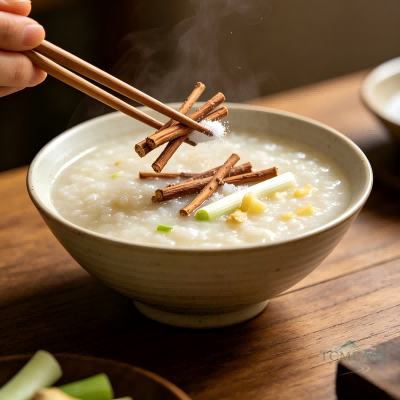
Guizhi Congee is a classic medicinal porridge rooted in the wisdom of Zhang Zhongjing's Shanghan Lun (Treatise on Cold Damage). In the Shanghan Lun, the administration of Guizhi Decoction (桂枝汤) is followed by this instruction: "After taking the decoction, drink one sheng of hot thin congee to assist the medicinal effect". The hot congee after the decoction helps induce sweating while protecting body fluids from being depleted. Guizhi Congee evolves this principle into an independent herbal porridge. Guizhi (cinnamon twig) releases the exterior, warms the channels, and unblocks yang; scallion whites and ginger enhance Guizhi's cold-dispersing and exterior-releasing effects; japonica rice warms the middle, boosts qi, and protects the stomach while assisting the herbs. Together, they induce sweating, release the exterior, warm the channels, unblock yang, and alleviate cold-related pain. The congee is smooth and warming, with a unique cinnamon-like aroma from Guizhi blended with the pungent fragrance of scallion and ginger. It is traditionally used for wind-cold exterior syndrome, wind-cold-dampness arthralgia, and deficiency-cold dysmenorrhea, making it a seasonal wellness congee for winter cold relief and spring wind prevention.
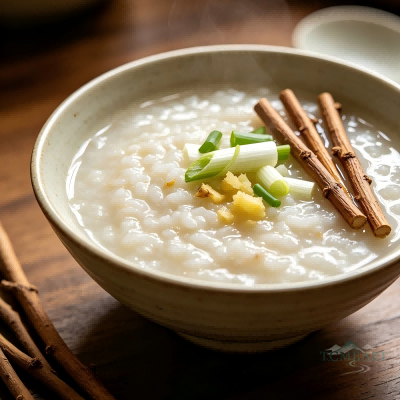
Main Ingredients
- Japonica rice (or regular rice) 100g
- Guizhi (Cinnamomi Ramulus, cinnamon twig) 10g
- Scallion whites 2 stalks
- Fresh ginger 3 slices
- Salt to taste
Steps
Place 10g of rinsed Guizhi and 100g of rinsed japonica rice together in a pot with adequate water.
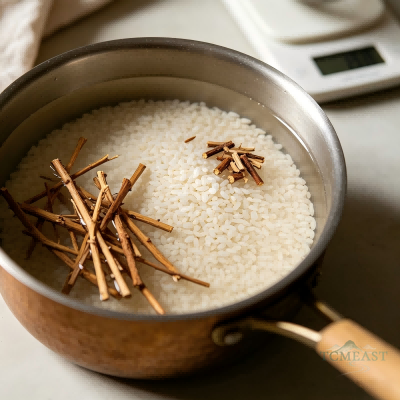
Bring to a boil over high heat, then reduce to low heat and simmer slowly until the rice is fully softened and the congee is thick.
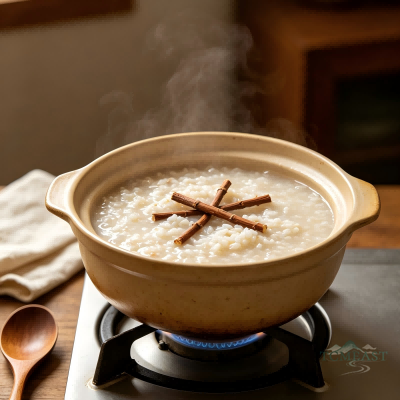
When the congee is nearly done, add 2 scallion whites (cut into sections) and 3 slices of fresh ginger (minced). Bring to one or two boils.
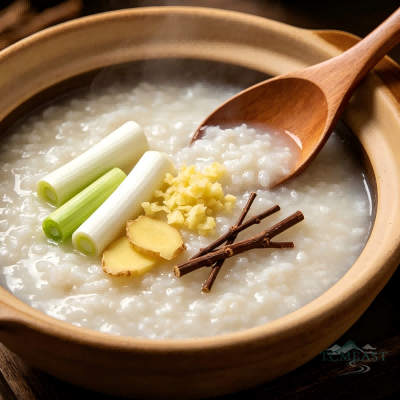
Remove the Guizhi (or pick it out before eating), season with a pinch of salt.
TCM Notes
Guizhi (Cinnamomi Ramulus): Pungent, sweet, and warm in nature; enters the Heart, Lung, and Bladder meridians. It releases the exterior, warms the channels, unblocks yang, and alleviates cold-related pain. The active component cinnamaldehyde dilates skin blood vessels, regulates circulation, and promotes sweating. Guizhi alcohol extract inhibits Staphylococcus aureus, E. coli, and influenza viruses; cinnamaldehyde also has sedative and analgesic effects. Guizhi has been widely used for wind-cold common colds, wind-cold-dampness arthralgia, epigastric cold pain, dysmenorrhea, and amenorrhea. Scallion Whites: Induce sweating, release the exterior, disperse cold, and unblock yang. When combined with Guizhi, they enhance the exterior-releasing effect, allowing the medicinal power to reach the entire body. Fresh Ginger: Warms the middle, stops vomiting, disperses cold, and releases the exterior. Combined with Guizhi and scallion, it unblocks channels, disperses cold, and enhances pain relief. Japonica Rice: Warms the middle, boosts qi, and enhances the medicinal effects while protecting stomach qi, ensuring dispersion without harming the body's integrity. Synergistic Effect: Guizhi with scallion and ginger multiplies the exterior-releasing effect; rice protects the stomach and assists the herbs, ensuring that the pungent-warm dispersion does not deplete body fluids. Total approx. 350-380 kcal, primarily carbohydrates – a low-fat warming herbal congee.
Suitable for:Those with wind-cold exterior syndrome (chills, fever, headache, body aches, nasal congestion with clear discharge, with or without sweating, aversion to wind) Those with wind-cold-dampness arthralgia, joint pain, and limited mobility Those with cold-dampness low back pain, fear of cold, and cold extremities Those with deficiency-cold dysmenorrhea, amenorrhea, and epigastric cold pain Those with spleen-yang deficiency, poor digestion, and loose stools Those with chilblains
Not suitable for:Those with exterior heat or wind-heat colds (high fever, sore throat, yellow phlegm/discharge, thirst) Those with yin deficiency with internal heat (palms and soles feeling hot, dry mouth, night sweats, irritability, insomnia) Those with blood heat or bleeding disorders – Guizhi is warm and pungent, which may damage yin and disturb blood Those with excess patterns or heat syndromes Pregnant women – use with caution (Guizhi may stimulate the uterus) Those with heavy menstrual bleeding – use with caution Those allergic to Guizhi – a small number may experience skin itching or rash Diabetes patients – congee has a high glycemic index; consume in small portions and reduce staple food intake accordingly