
Stews
Lamb and Radish Stew
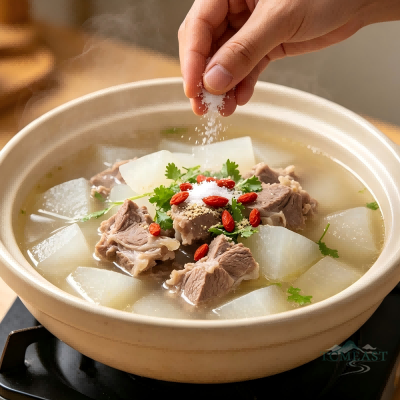
Lamb and Radish Stew is a classic medicinal soup that combines delicious flavor with health benefits, documented in the Chinese Medicinal Diet Dictionary and the Compendium of Materia Medica. As the saying goes, "Eat radish in winter and ginger in summer, and you won't need a doctor's prescription". Lamb is warm in nature and known as "winter ginseng", while white radish is cool in nature, helping to regulate qi, aid digestion, and moisten the lungs. Together, they create a nourishing dish that warms without causing internal heat. The finished soup is clear and flavorful, with tender lamb and translucent radish. It is renowned for tonifying the middle, supplementing qi, strengthening the spleen, aiding digestion, warming the middle, and relieving cough and phlegm.
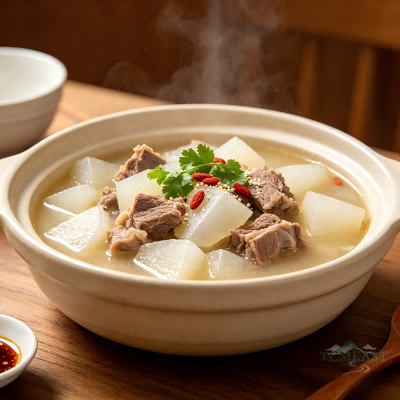
Main Ingredients
- Lamb 500g
- White radish (daikon) 1000g
- Fresh ginger 5-6 slices
- Spring onion 2 sections
- Cooking wine 1 tbsp
- Dried tangerine peel (Chenpi) 10g
- Star anise 1 piece
- Goji berries a handful
- Salt to taste
- Ground white pepper a pinch
Steps
Lamb: Cut lamb into approximately 3cm cubes. Soak in water for 1-2 hours, changing the water several times to remove blood. Place in cold water with ginger slices and cooking wine, bring to a boil, and blanch for 3-5 minutes, skimming off foam. Remove and rinse with warm water, then drain. Radish: Peel and cut into rolling chunks (not too large for better flavor absorption). Aromatics: Slice the ginger; cut spring onion into sections. Rinse dried tangerine peel if using.
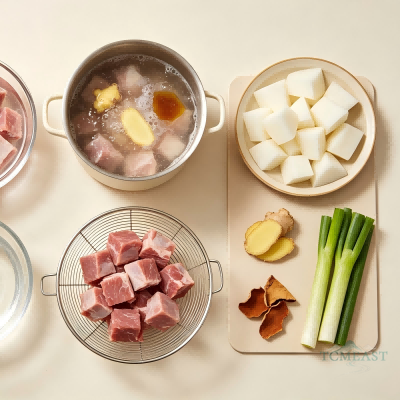
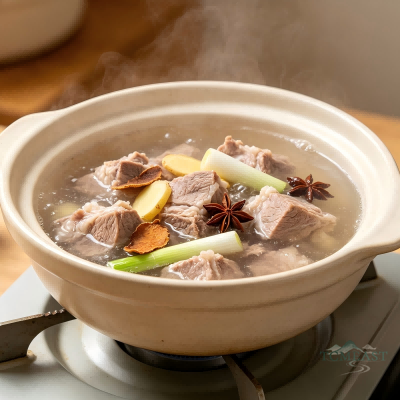
Place the blanched lamb in a clay pot (sand pot) . Add ginger slices, spring onion sections, dried tangerine peel (if using), star anise (if using), and enough boiling water to cover the meat by 2-3cm. Bring to a boil over high heat, then reduce to low heat and simmer for about 40 minutes to 1 hour until the lamb is tender.
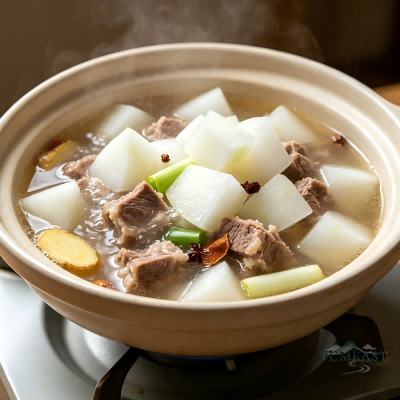
Add the radish chunks to the pot and continue simmering over low heat for 15-20 minutes until the radish is translucent and fully cooked.
Add salt to taste (add at the end to prevent the meat from becoming tough). Add goji berries 2 minutes before turning off the heat (if using). Sprinkle with ground white pepper or chopped cilantro for extra flavor if desired.
TCM Notes
Lamb: Warm in nature, sweet in taste, acts on the Spleen and Kidney meridians. Rich in high-quality protein, iron, zinc, and B vitamins – with higher calcium and iron content than pork and beef. Known to supplement nutrition, warm the meridians, nourish blood, and strengthen the spleen and stomach. Especially beneficial for anemia, postpartum qi-blood deficiency, and all types of deficiency-cold conditions. White radish: Cool in nature, pungent and sweet in taste, acts on the Spleen, Stomach, Lung, and Large Intestine meridians. Rich in dietary fiber, vitamin C, vitamin A, B vitamins, and minerals including calcium, phosphorus, iron, and potassium. Known to aid digestion, promote bowel movements, regulate blood pressure, and supplement vitamins. It also promotes digestion, descends qi, resolves phlegm, stops bleeding, quenches thirst, and promotes diuresis. Dried tangerine peel (Chenpi) (if used): Regulates qi, strengthens the spleen, and dries dampness to resolve phlegm. Together, they achieve the synergistic effects of relieving cough and phlegm, warming the middle, supplementing qi, and promoting digestion.
Suitable for:Those with Yang deficiency, cold sensitivity, and cold hands and feet Those with weak constitution, qi-blood deficiency, and fatigue Those with poor appetite, food stagnation, and indigestion Those with phlegm-heat cough and deficiency-cold abdominal pain Those recovering from illness or with postpartum qi-blood deficiency Middle-aged and elderly individuals for winter nourishment General population for winter wellness
Not suitable for:Those with Damp-Heat constitution, Liver Fire excess, or Phlegm-Dampness constitution Those with Yin deficiency with Fire excess, internal excess heat, or red tongue with little moisture Those with Yin deficiency dry cough, hemoptysis, or hematemesis – use with caution Those with colds, fever, or acute inflammation Those with Spleen-Stomach deficiency and loose stools – avoid overconsumption Those taking ginseng-based tonics – radish may reduce their effectiveness Those with gastric ulcers, duodenal ulcers, or chronic gastritis – consume sparingly Those allergic to lamb – strictly avoid