
Stews
Braised Free-Range Chicken with Chestnuts
Braised Free-Range Chicken with Chestnuts is a classic autumn nourishing dish, recognized in the Chinese Medicinal Diet Dictionary as a spleen-tonifying medicinal dish. Chestnuts, known as the “king of dried fruits,” are celebrated for “supplementing qi, strengthening the spleen, and tonifying the kidneys”. Free-range chicken is warm and sweet in nature, known for “warming the middle, supplementing qi, and nourishing essence and marrow”. Slowly simmered together, the chicken becomes tender and falls off the bone, while the chestnuts turn soft and sweet. This dish is renowned for strengthening the spleen and stomach, tonifying the kidneys, and warming the middle to supplement qi. Total cooking time is about 1.5-2 hours – an ideal choice for autumn and winter nourishment.
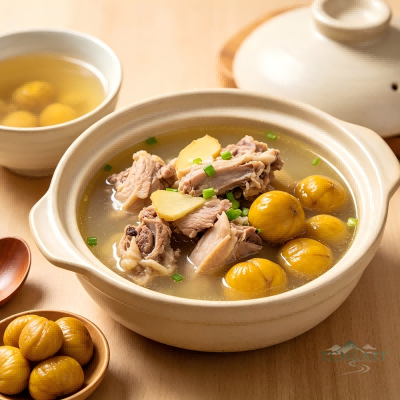
Main Ingredients
- Free-range chicken 1 whole
- Chestnuts 500g
- Fresh ginger 5-6 slices
- Spring onion 1 section
- Cooking wine 2 tbsp
- Salt to taste
- Cooking oil as needed
- Ground white pepper a pinch
Steps
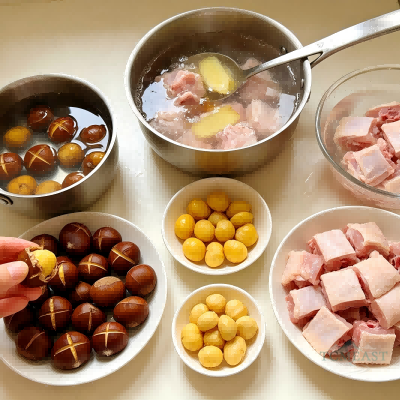
Chestnuts: Wash and score a cross on the shell of each chestnut. Bring water to a boil, add chestnuts, and cook for 2-3 minutes until the shells split. Remove and peel while hot (the inner skin is difficult to remove once cooled). Pre-shelled chestnuts can also be used. Chicken: Clean and cut the chicken into 4-5cm pieces. Place in cold water with ginger slices and cooking wine, bring to a boil, and blanch for 2-3 minutes, skimming off foam. Remove, rinse with warm water, and drain.
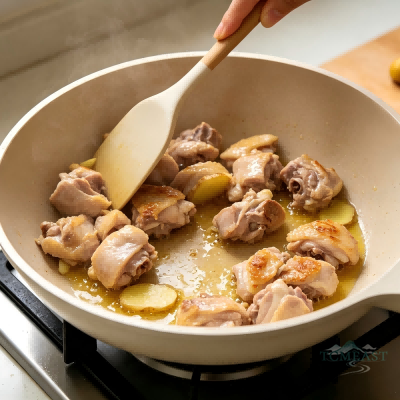
Heat a wok over medium heat with cooking oil (rapeseed or tea seed oil recommended). Add ginger slices and sauté until fragrant. Add the blanched chicken pieces and stir-fry for about 3-5 minutes until the surface turns slightly golden and aromatic. Add a splash of cooking wine along the edge of the wok to remove any gamey odor.
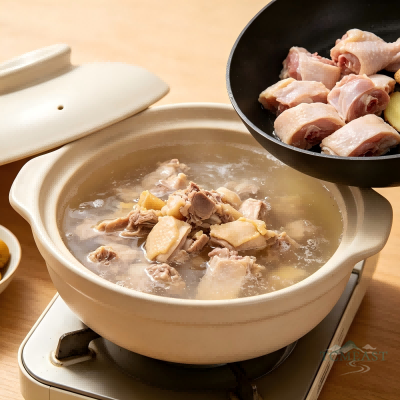
Transfer the stir-fried chicken to a clay pot (sand pot) (recommended for best heat retention). Add enough boiling water to fully cover the chicken (add all water at once; do not add more during cooking). Bring to a boil over high heat, then reduce to low heat and simmer for about 1 hour.
After 1 hour, when the chicken is tender, add the prepared chestnuts. Continue simmering over low heat for another 30-40 minutes until the chestnuts are soft and the chicken is falling off the bone.
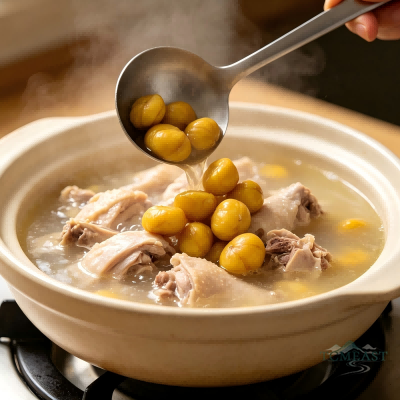
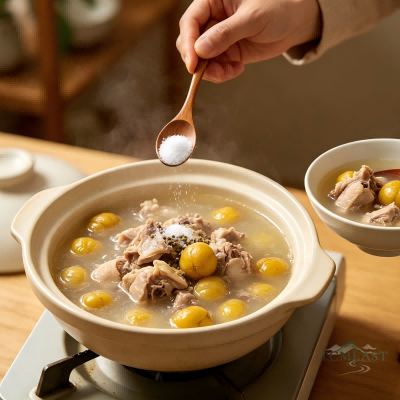
Add salt to taste 10-15 minutes before serving (do not add salt too early, as it will make the meat tough). Sprinkle with a pinch of ground white pepper if desired. Turn off the heat and let it rest, covered, for 5 minutes to allow the flavors to meld. Serve hot.
TCM Notes
Chestnuts: Warm in nature, sweet in taste, acts on the Spleen, Stomach, and Kidney meridians. Rich in starch, protein, vitamins B₁, B₂, C, unsaturated fatty acids, and minerals including calcium, phosphorus, iron, potassium, magnesium, and zinc. Known to supplement qi, strengthen the spleen, tonify the kidneys, and invigorate blood. Effective for kidney deficiency-related symptoms such as sore lower back and knees, osteoporosis, and frequent urination. Dietary fiber promotes intestinal motility. Free-range chicken: Warm in nature, sweet in taste, acts on the Spleen and Stomach meridians. Rich in high-quality protein, amino acids, B vitamins, potassium, and calcium. Known to warm the middle, supplement qi, nourish essence and marrow, strengthen muscles and bones, and invigorate blood. Beneficial for post-illness weakness, chronic deficiency, emaciation, edema, and postpartum recovery. High-quality protein helps boost immunity. Together, they achieve the synergistic effects of strengthening the spleen and stomach, tonifying the kidneys, warming the middle, and nourishing yin.
Suitable for:Those with spleen-kidney deficiency: Sore lower back and knees, osteoporosis, frequent urination Those with weak spleen and stomach: Poor appetite, indigestion, diarrhea Those recovering from illness or chronic weakness Postpartum women needing nourishment Middle-aged and elderly individuals: For strengthening bones and tonifying kidneys General population: For autumn nourishment and overall wellness
Not suitable for:Those with Damp-Heat constitution – this dish is highly nourishing and may worsen symptoms Those with food stagnation, poor digestion, or abdominal distension – chestnuts may cause bloating and constipation Those with Yin deficiency and Fire excess – use with caution Diabetic patients – chestnuts are high in starch Those with colds, fever, or excess pathogenic conditions – chicken's warm nature may trap pathogens Those with loose stools – use with caution Infants and young children – consume sparingly; rich foods may burden immature digestion Those allergic to chicken or chestnuts – strictly avoid