
Herbal Teas
Mulberry juice
Mulberry juice is a natural beverage made from fresh mulberries. Mulberries have long been valued as both food and medicine, with records in classic texts such as the Compendium of Materia Medica and Dian Nan Ben Cao. There are various ways to prepare mulberry juice – it can be freshly squeezed or simmered to extract the juice. The finished juice has a deep purple-red color and a refreshing sweet-and-sour taste. Mulberries are known as the “folk saint fruit” and contain 5-6 times more nutrients than apples and 4 times more than grapes. This juice is renowned for nourishing yin and blood, promoting fluid production, moistening dryness, darkening hair, and moistening the intestines. It is hailed by the medical community as the “best health fruit of the 21st century”.
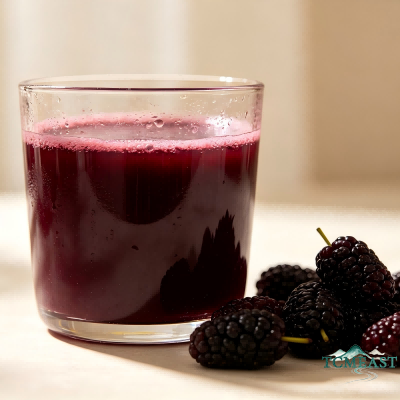
Main Ingredients
- Fresh mulberries 500g
- Purified water or cold boiled water as needed
- Rock sugar or white sugar to taste
- Lemon half
- Honey to taste
- Salt a pinch
Steps
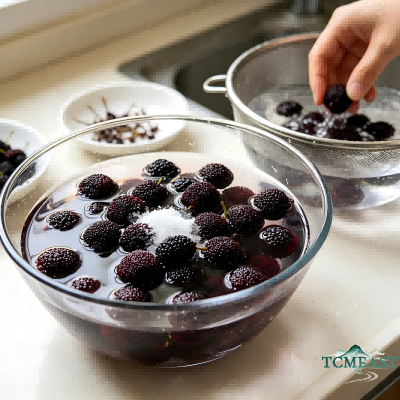
Place fresh mulberries in a bowl with water and a pinch of salt. Soak for about 15 minutes. The rough surface of mulberries traps dirt – salt water helps remove impurities and pesticide residues. Rinse 1-2 times with clean water and drain. Remove the small stems and fruit stalks.
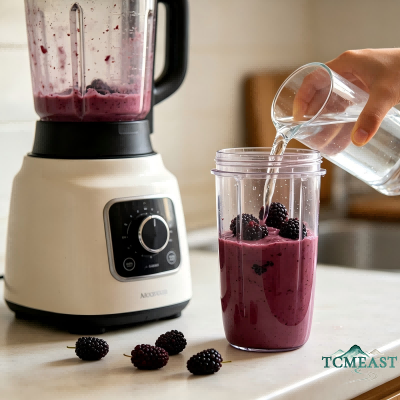
Place the prepared mulberries into a juicer or blender. Add an appropriate amount of purified water or cold boiled water (adjust to desired consistency; can be made without water). Blend on high speed for about 1 minute until smooth.
For a smoother texture, strain through a fine mesh sieve. Skipping this step retains more dietary fiber.
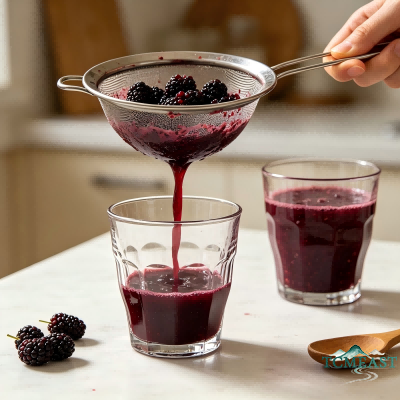
Pour into a glass and add honey or sugar to taste. Stir well.
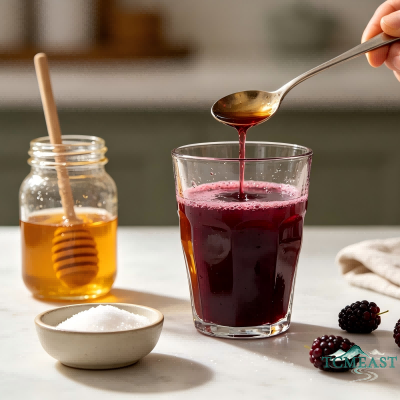
TCM Notes
Mulberries: Cold in nature, sweet and sour in taste, acts on the Heart, Liver, and Kidney meridians. Rich in active proteins, vitamins (VB1, VB2, VC), 16 amino acids, minerals, and anthocyanins. Mulberry juice contains about 1.85mg of iron per 100g, and its anthocyanins have antioxidant activity 20 times that of vitamin C. In TCM, mulberries are known to nourish yin and blood, promote fluid production, moisten dryness, and tonify the liver and kidneys. They are effective for symptoms of liver-kidney Yin deficiency such as dizziness, tinnitus, palpitations, insomnia, premature graying of hair, thirst, and constipation. Modern research shows that mulberries help regulate immunity, lower blood sugar and lipids, delay aging, improve anemia, provide antioxidants, and protect vision. Rock sugar/Honey: Rock sugar moistens the lungs and harmonizes flavor; honey moistens dryness and enhances nutrition. Lemon: Rich in vitamin C, adds fresh aroma and aids in antioxidant protection. In summary, mulberry juice offers multiple benefits including nourishing yin and blood, promoting fluid production, moistening dryness, darkening hair, improving vision, and providing antioxidant and anti-aging effects.
Suitable for:Those with Yin-blood deficiency: Symptoms include dizziness, tinnitus, palpitations, restlessness, insomnia, and sore lower back Those with premature graying or dull hair (mulberries contain a substance that helps darken and add luster to hair) Those with thirst due to fluid deficiency or internal heat Those with constipation due to intestinal dryness Those with eye strain or vision fatigue Those with neurasthenia, palpitations, or insomnia General population can consume in moderation
Not suitable for:Those with Spleen-Stomach deficiency cold: Mulberries are cold in nature; those with frequent abdominal pain and cold sensitivity should avoid Those with loose stools or diarrhea: Mulberries are cold and may worsen symptoms Diabetic patients: Mulberry juice contains high sugar content and may cause blood sugar spikes; daily intake should be limited to within 150ml Those with kidney disease: Mulberries are high in potassium, especially concentrated juice – kidney disease patients should avoid Pregnant women: Mulberries are cold in nature – consult a doctor before consumption Children: Should consume with caution; dilute with warm water when first introducing Those allergic to mulberries: Strictly avoid to prevent allergic reactions Those prone to frequent nosebleeds: Should not overconsume