Soups
Danggui Lamb Soup
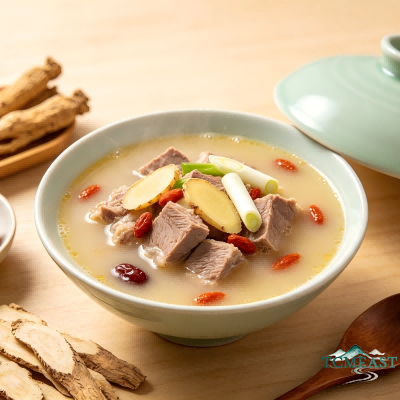
Danggui Lamb Soup, also known as "Danggui Shengjiang Yangrou Tang" (Angelica, Ginger, and Lamb Soup), is a classic Chinese medicinal dietary therapy with a history of over 2,000 years. This recipe was created by Zhang Zhongjing, the "Sage of Traditional Chinese Medicine," and recorded in the Han Dynasty medical classic Jin Gui Yao Lue (Synopsis of the Golden Chamber): "For cold-induced hernia with abdominal pain and hypochondriac pain with urgency, Danggui Shengjiang Yangrou Tang is indicated" and "For postpartum abdominal pain, Danggui Shengjiang Yangrou Tang is indicated". The original formula consists of only three ingredients: Danggui, ginger, and lamb, and is renowned as the "number one formula for dispelling cold in TCM". Slow-simmered to perfection, the soup is clear with a slight white hue. The lamb becomes tender and falls off the bone, while the herbal aroma of Danggui and the pungent warmth of ginger blend harmoniously, creating a rich, mellow, and subtly sweet flavor. It is renowned for warming the middle, tonifying deficiency, dispelling cold, relieving pain, and nourishing blood, making it the premier medicinal dietary therapy for winter nourishment and warming the body.
Main Ingredients
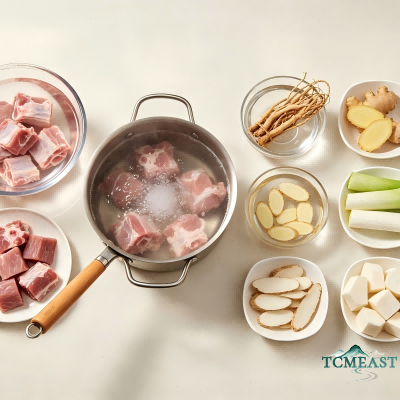
- Lamb (mutton) 500g
- Angelica sinensis (Danggui) 20g
- Fresh ginger 30g
- Spring onions 1-2 stalks
- Yellow wine (or cooking wine) 30ml
- Salt to taste
- Ground white pepper a pinch
- Ground Sichuan pepper a pinch
- Goji berries 10g
- Red dates 5-6 pieces 5-6 pieces
- White radish half
- Chinese yam 100g
- Water chestnuts 3-4 pieces
Steps
Lamb: Wash the lamb and remove the fascia. Cut into strips approximately 5cm long, 2cm wide, and 1cm thick, or into 3-4cm cubes. Soak in water for about 1 hour, changing the water several times to remove blood. Place in cold water, bring to a boil, then reduce heat and simmer for 3 minutes. Skim off the foam, remove, and rinse with warm water. Danggui: Rinse the Danggui clean. Soak in water for 30 minutes beforehand to help release active compounds. Slice thinly. Ginger: Peel and slice into large pieces. Other ingredients: Wash and cut spring onions into sections. If using white radish, Chinese yam, or water chestnuts, peel and cut into chunks.
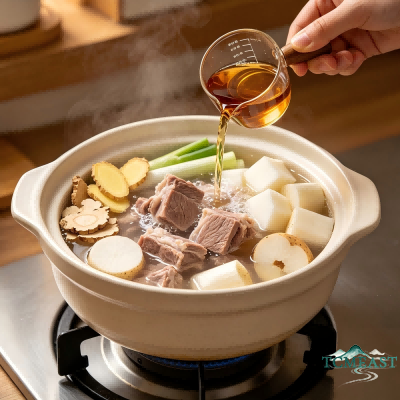
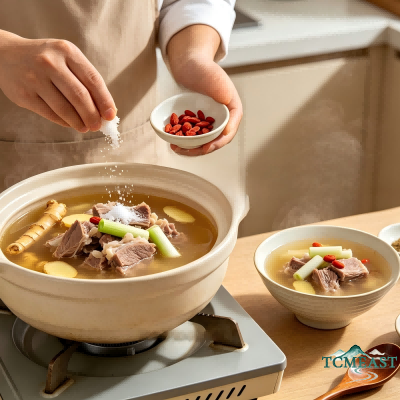
Place the blanched lamb pieces into a clay pot (sand pot) (recommended for best heat retention). Add the Danggui slices, ginger slices, and spring onion sections. If using white radish, Chinese yam, or water chestnuts, add them at this stage. Add yellow wine (or cooking wine). Add enough boiling water to cover all ingredients. Bring to a rolling boil over high heat, skimming off any foam. Reduce to low heat and simmer for 1.5 to 2 hours.
When the lamb is tender, add salt to taste. If using goji berries, add them 5-10 minutes before turning off the heat. Sprinkle with ground white pepper and Sichuan pepper for extra flavor if desired. Drink the soup and eat the meat, best served warm.
TCM Notes
Lamb: Sweet in taste, hot in nature, acts on the Spleen, Stomach, and Kidney meridians. According to the Compendium of Materia Medica, it "warms the middle, tonifies deficiency, supplements the middle and benefits qi, stimulates appetite, strengthens the body, benefits kidney qi, nourishes the gallbladder, brightens the eyes, and treats deficiency-cold and consumptive conditions". Lamb is rich in high-quality protein, calcium, iron, zinc, and B vitamins, with lower fat content than pork and beef. Angelica sinensis (Danggui) : Sweet, pungent, and warm in nature, acts on the Liver, Heart, and Spleen meridians. Known as the "qi-in-blood herb and the sage of blood herbs". It nourishes and invigorates blood, regulates menstruation, relieves pain, and moistens the intestines. Ginger: Pungent and warm in nature. Known to warm the middle, dispel cold, and relieve nausea. Synergistic effect: Danggui warms yang and invigorates blood to unblock the meridians; ginger disperses cold with its pungent warmth; lamb warms yang and nourishes blood to tonify deficiency and ward off cold. Together, they warm the middle, dispel cold, nourish and harmonize blood – tonifying without stagnation, dispelling cold while enriching blood.
Suitable for:Those with Yang deficiency constitution: Chronically畏寒怕冷, cold hands and feet, preference for warmth Those with Blood deficiency constitution: Pale or sallow complexion, fatigue, dizziness, palpitations Postpartum women with blood deficiency and abdominal cold pain Those with menstrual irregularities and dysmenorrhea caused by qi-blood deficiency Those with consumptive deficiency or post-illness weakness Middle-aged and elderly with Yang deficiency,畏寒, and sensitivity to wind Sub-healthy and healthy individuals for daily winter wellness and health maintenance
Not suitable for:Those with Heat constitution: Prone to heat sensations, easy to get "heaty" symptoms, dry mouth, bitter taste, sore throat Those with Yin deficiency and Fire excess: Hot palms and soles, night sweats, tidal fever Those with Damp-Heat constitution: Yellow greasy tongue coating, dry stools Those with colds, fever, sore throat, or mouth ulcers Those with Excess-Heat conditions Those with skin diseases or allergic asthma: Lamb is considered a "发物" (trigger food) that may induce or worsen symptoms Pregnant women: Danggui has blood-invigorating effects – avoid in the first trimester, consume only under medical supervision in later stages Those with diarrhea or abdominal distension Menstruating women (those with heavy flow should avoid)