
Formulas & Needles
TCM for Insomnia: Calming Herbs, Points and Evening Rituals
A TCM approach to insomnia that looks at why you cannot sleep, not just how to force sleep. Explore calming herbs, acupressure points, and an evening routine that quiets the mind.
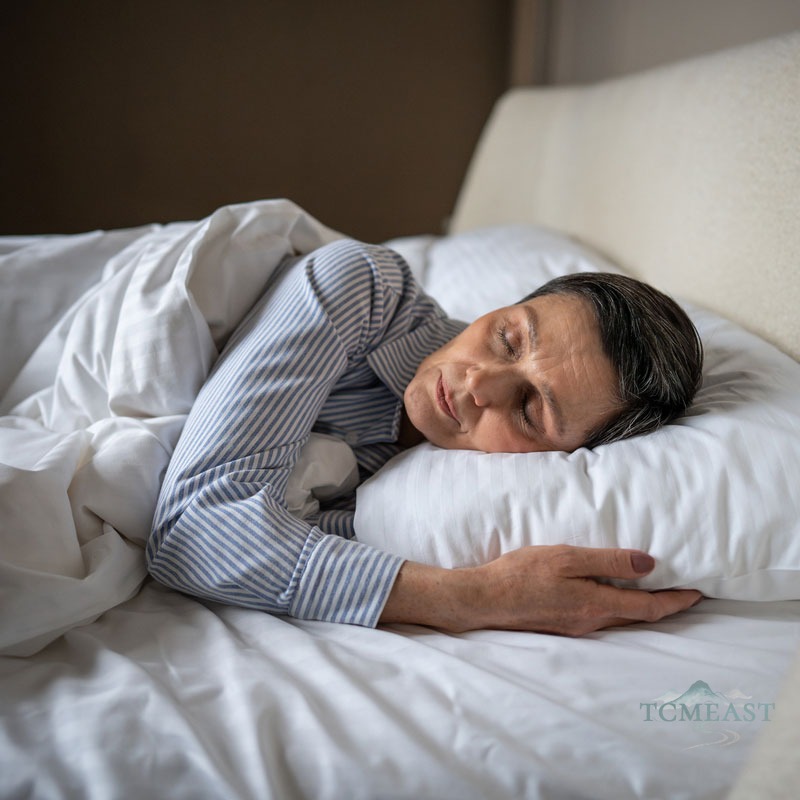
A Personal NoteInsomnia is rarely a problem with the bed. It is usually a problem with the mind that cannot stop, the body that cannot wind down, or the energy that is scattered. TCM does not treat "sleep" as one condition. It asks which part of you is keeping the other awake: is the Heart fire restless, is the Liver qi stuck, is the Stomach full, or is the Yin simply too dry to hold the spirit? Once you know the pattern, the remedy becomes surprisingly practical: a herb, a point, a time to eat, and a way to end the day.
TCM Patterns of Insomnia
Heart-Spleen deficiency: Difficulty staying asleep, vivid or exhausting dreams, fatigue during the day, poor appetite, pale face. Common in overthinkers and people who carry mental load.
Liver qi stagnation with heat: Trouble falling asleep because the mind races, irritability, jaw clenching, PMS-related insomnia. Stress is the engine.
Yin deficiency with fire: Falling asleep but waking in the small hours, night sweats, dry mouth, hot palms and soles. Common after 40 or after long illness.
Stomach disharmony: Restless sleep after heavy or late meals, bloating, acid reflux, "sleeping on a full stomach." The classic line from the Huangdi Neijing: "When the stomach is not harmonious, sleep is disturbed."
Calming Herbs
These herbs appear again and again in TCM sleep formulas:
Suan Zao Ren (Sour Jujube Seed): The single most famous herb for sleep. Nourishes Heart and Liver blood and anchors the spirit. 9-15g, often used in Suan Zao Ren Tang.
Fu Ling (Poria): Drains dampness, strengthens the Spleen, and calms the spirit. The gentle workhorse in many formulas.
Bai Zi Ren (Arborvitae Seed): Nourishes Heart blood and moistens dryness. Good for dry, anxious, light sleepers.
Yuan Zhi (Polygala): Opens the Heart and calms the mind, and it pairs well with Fu Ling for racing thoughts.
Ye Jiao Teng (Caulis Polygoni Multiflori): The night vine, traditionally used for insomnia and restless legs. Often 15-30g in decoction.
Gan Mai Da Zao Tang (Licorice, Wheat, and Jujube Decoction): A gentle classic for emotional restlessness and grief-related insomnia, especially when the mind feels raw or anxious.
Do not mix multiple sleep herbs on your own. A practitioner will choose one formula that matches your pattern; taking several can dull the effect or cause daytime drowsiness.
Acupressure Points for Sleep
Shen Men (HT7): On the wrist crease, in the hollow below the little finger. The "Spirit Gate." Press gently for 1-2 minutes on each wrist before bed.
An Mian (EX-HN22): The "Peaceful Sleep" point, located behind the ear in the hollow between the mastoid bone and the jaw. Press in small circles for 1-2 minutes.
Yin Tang (EX-HN3): The third eye point between the eyebrows. Rest your middle finger here and breathe slowly. One of the fastest ways to tell your nervous system the day is over.
Yong Quan (KI1): On the sole of the foot, about one-third from the toes. Pressing this point before bed draws energy downward and calms a busy mind.
An Evening Routine Based on TCM
Stop eating 3 hours before bed: A full Stomach steals qi from the Heart and the spirit. If you are hungry, choose a small warm snack like millet porridge or a banana, not cold fruit or caffeine.
Dim the lights, warm the feet: Light keeps the Liver in "working" mode. An hour before bed, lower the lights, and soak your feet in warm water for 10-15 minutes. This pulls blood and qi down and warms the Kidney pathway.
Write the loop down: If you wake at 3am with the same thought, keep a small notebook beside the bed. Writing it down once tells the mind it is stored, which reduces the urge to rehearse it all night.
Use the same wake time: TCM values regularity over sleep duration. Going to bed late every night but waking at the same time is more stabilizing than erratic hours, even if you feel short on sleep for a week.