
Herbal Teas
Water Chestnut Sweet Soup (Water Chestnut & Snow Fungus Sweet Soup)
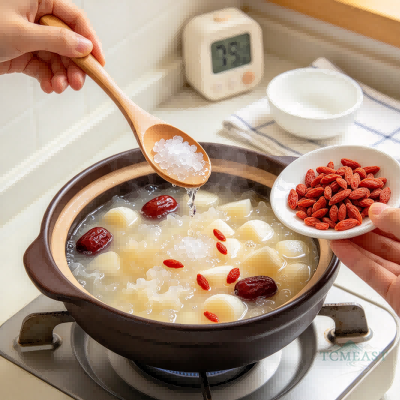
Water Chestnut Sweet Soup is a classic Lingnan folk dietary remedy for moistening dryness with a clear, sweet taste. Water chestnuts are sweet in taste and cold in nature, entering the Lung and Stomach meridians, with the effects of clearing heat, generating fluids, resolving phlegm, aiding digestion, promoting diuresis, and relieving constipation. Snow fungus nourishes yin, moistens the lungs, benefits the stomach, and generates fluids. Red dates tonify the middle, boost qi, nourish blood, and calm the mind. Goji berries nourish the liver and kidneys and improve vision. Rock sugar tonifies the middle, boosts qi, harmonizes the stomach, and moistens the lungs. The soup is clear and slightly thick, with crisp-sweet water chestnuts, soft gelatinous snow fungus, and a mild sweetness from dates and goji berries. It is especially suitable for dry autumn and winter seasons, lung-heat dry cough, dry mouth and throat, and food stagnation. Note: Water chestnuts must be thoroughly cooked and are not recommended raw.
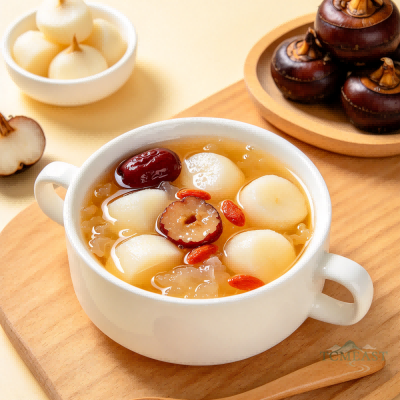
Main Ingredients
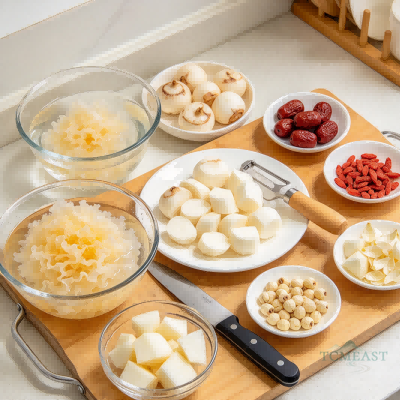
- Fresh water chestnuts 300g
- Dried snow fungus (Tremella) (half a piece) 10g
- Red dates (pitted) 6-8 pieces
- Goji berries 10g
- Rock sugar 20-30g
- Water 1200-1500ml
- Pear 1 piece
- Lotus seeds 20g
- Dried lily bulb 10g
Steps
Soak snow fungus: Soak 10g of dried snow fungus in water for 1-2 hours until fully expanded. Trim off the yellow hard base and tear into small pieces. Prep water chestnuts: Wash 300g of fresh water chestnuts, peel off the skin, and cut into small pieces or halves. Note: Water chestnuts grow in mud and must be thoroughly washed and peeled. Prep accessories: Rinse 6-8 red dates and remove pits; rinse 10g of goji berries; if using pear, peel, core, and cut into pieces; if using lotus seeds or lily bulb, soak in advance.
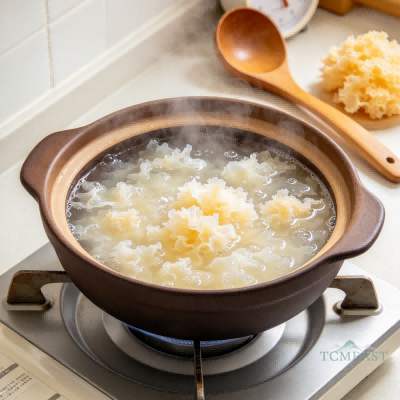
Place snow fungus in a clay pot with 1200-1500ml of water. Bring to a boil over high heat, then reduce to low heat and simmer for 30-40 minutes until the snow fungus releases its gelatin and the liquid thickens slightly.
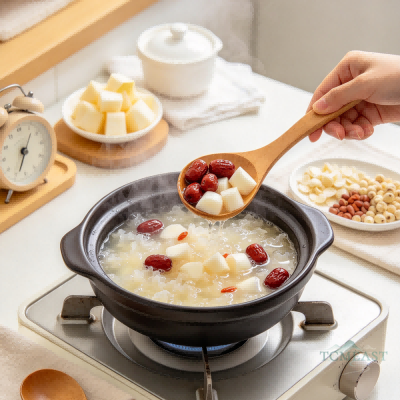
Add water chestnut pieces and red dates. Continue simmering over low heat for 15-20 minutes until the water chestnuts are cooked through and the dates are soft. If using pear, lotus seeds, or lily bulb, add them now.
Add 20-30g of rock sugar and stir until dissolved. Add goji berries 5 minutes before turning off the heat. Turn off the heat, transfer to bowls, and serve warm. Consume 1-2 times daily, about 1 bowl (200-250ml) per serving.
TCM Notes
Water Chestnuts (Biqi): Each 100g contains approximately 60-70 kcal, about 84% water, 14g carbohydrates, 1.2g protein, and 1.1g dietary fiber. Rich in vitamin C, potassium, phosphorus, and other minerals. Known for clearing heat, generating fluids, resolving phlegm, aiding digestion, promoting diuresis, and relieving constipation. The compound biqin has some inhibitory effects on Staphylococcus aureus and E. coli. Water chestnuts are cold in nature, and raw water chestnuts may carry Fasciolopsis buski metacercariae; they must be thoroughly cooked before eating. Snow Fungus (Tremella): Rich in polysaccharides, dietary fiber, and minerals. Known for nourishing yin, moistening the lungs, benefiting the stomach, generating fluids, and moistening the intestines. It releases gelatin after cooking, giving a soft, smooth texture that helps moisturize dryness and support skin health. Red Dates: Sweet in taste, warm in nature; enter the Spleen and Stomach meridians. Known for tonifying the middle, boosting qi, nourishing blood, and calming the mind. Goji Berries: Sweet in taste, neutral in nature; enter the Liver and Kidney meridians. Known for nourishing the liver and kidneys, and improving vision. Overall: The soup contains approximately 200-300 kcal (depending on rock sugar amount), primarily carbohydrates, rich in dietary fiber, vitamin C, and potassium—a low-fat, moistening medicinal sweet soup.
Suitable for:Those with dry mouth, dry throat, and dry skin in autumn and winter Those with lung-heat dry cough, dry cough with little phlegm, and dry itchy throat Those with fever with fluid depletion, dry mouth, and thirst Those with food stagnation, abdominal bloating, indigestion, and poor appetite Those with scanty dark urine and dry hard stools General population for autumn-winter dryness relief and daily wellness
Not suitable for:Those with Spleen-Stomach Cold Deficiency or prone to diarrhea – use with caution. Water chestnuts are cold, and snow fungus moistens the intestines; those with cold intolerance, diarrhea, or abdominal cold pain may worsen symptoms. Add 1-2 slices of ginger or increase red dates to balance the cold nature. Diabetes patients – use with caution or avoid. Rock sugar is high in sugar and raises blood glucose quickly; strictly control intake, consult a doctor for sugar substitutes, or omit rock sugar. Those with wind-cold cough – use with caution. Symptoms include white thin phlegm, chills, and clear runny nose. Water chestnuts are cold and may worsen cold cough. Women during menstruation – use with caution. Water chestnuts are cold; excessive intake may worsen menstrual pain or impede menstrual flow. Pregnant women – use with caution. Cooling in nature; avoid large amounts and consult a doctor. Those with renal insufficiency – use with caution. Water chestnuts are relatively high in potassium; control intake under medical guidance. Those allergic to water chestnuts, snow fungus, red dates, or goji berries – avoid. Infants and young children – use with caution. Water chestnuts must be thoroughly cooked; their digestive systems are delicate, so try small amounts. Infants under 1 year old – absolutely no honey – if honey is used instead of rock sugar, it is forbidden for infants under 1 year and may cause infant botulism.