
Herbal Teas
Prunella (Selfheal) Tea (Xiakucao Cha)
Prunella Tea is a classic liver-calming medicinal tea originating from the Reference Materials for Research on Common Disease Prescriptions. Prunella was first recorded in the Han Dynasty Shennong Bencao Jing and is named for its characteristic of wilting after the summer solstice. It is bitter, pungent, and cold in nature, entering the Liver and Gallbladder meridians, with the effects of clearing Liver fire, improving vision, and dispersing nodules to reduce swelling. Brewed as a tea, it helps calm Liver yang and is suitable for early-stage hypertension, as well as headache and dizziness caused by high blood pressure. This tea is especially suitable for spring consumption when Liver fire tends to be excessive.
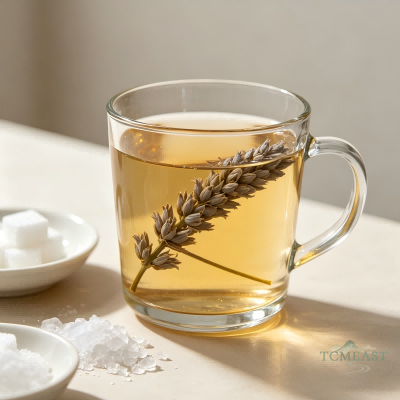
Main Ingredients
- Prunella spike (Xiakucao) 10-30g
- Boiling water as needed
- Rock sugar or white sugar to taste
Steps
Take 10g of prunella. If using whole plants, grind into coarse powder. Rinse quickly with clean water to remove surface dust (do not scrub with hands, as this will significantly reduce its active compounds).
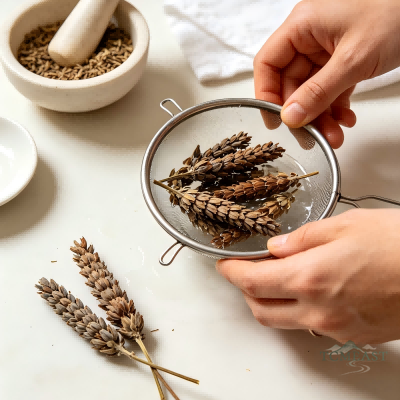
Put the rinsed prunella into a teacup or teapot. Pour freshly boiled water (about 200ml) over the prunella Cover and steep for 10-15 minutes.
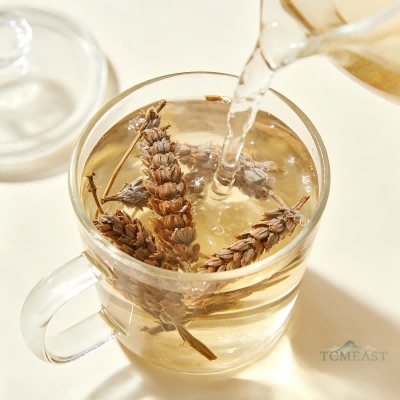
Add a small amount of rock sugar or white sugar to taste if desired. Consume 1 dose daily, drinking frequently as tea until the flavor fades.
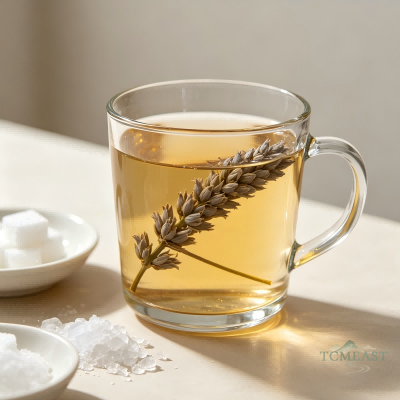
TCM Notes
Prunella (Xiakucao) : Pungent, bitter, and cold in nature; enters the Liver and Gallbladder meridians. Known for clearing Liver fire, improving vision, and dispersing nodules to reduce swelling. Modern pharmacology shows it contains triterpenoid saponins, rutin, ursolic acid, and other active compounds, with anti-inflammatory, blood pressure-lowering, blood sugar-lowering, lipid-lowering, anti-myocardial infarction, sedative-hypnotic, antioxidant, and immunomodulatory effects. It inhibits various bacteria including Shigella, Vibrio cholerae, E. coli, and Staphylococcus. Prunella water extract also inhibits the growth and aggregation of calcium oxalate crystals in vitro. Characteristics: The tea contains virtually no calories and is rich in flavonoids, triterpenoids, and various trace elements – a purging-type medicinal tea.
Suitable for:Those with early-stage hypertension, and headache/dizziness caused by high blood pressure Those with red, swollen, or painful eyes, headache, dizziness, and bitter taste due to Liver fire flaring upward Those with fire-heat stagnation manifesting as swollen cervical lymph nodes or breast hyperplasia (use in combination under medical guidance) Those with dry, red eyes after staying up late or prolonged screen use Those with phlegm-fire stagnation manifesting as scrofula (cervical tuberculous lymphadenitis) or goiter
Not suitable for:Those with Spleen-Stomach Cold Deficiency – those who are afraid of cold, experience diarrhea after eating cold foods, or have loose stools should avoid Those with Yang Deficiency and Cold Constitution – those with year-round cold hands/feet, cold intolerance, and weak knees should avoid Pregnant women – absolutely contraindicated due to its blood-activating and nodule-dispersing effects Women during menstruation – use with caution; may worsen abdominal pain or cause menstrual stasis Those with hypotension – this tea has a clear blood pressure-lowering effect Those with yin deficiency and heat without excess fire – cold-natured items may worsen deficiency heat General population – not suitable for long-term consumption due to its cold nature, which may damage Yang qi Those taking potassium-sparing diuretics (e.g., spironolactone) – prunella is rich in potassium; concurrent use may cause hyperkalemia