
Herbal Teas
Cassia Seed Tea (Juemingzi Cha)
Cassia Seed Tea is a classic liver-calming and vision-improving medicinal tea originating from the Tang Dynasty classic Shiliao Bencao (Dietetic Materia Medica). Cassia seeds were first recorded in the Han Dynasty Shennong Bencao Jing and listed as a top-grade herb, named for their renowned vision-improving effects. They are sweet, bitter, and salty in taste, slightly cold in nature, entering the Liver and Large Intestine meridians, with the effects of clearing heat, improving vision, and moistening the intestines to relieve constipation. As they are caffeine-free, they are known as "Chinese coffee beans" in Japan. Cassia Seed Tea is simple to prepare – roasted cassia seeds have a unique coffee-like aroma and a smooth taste, making it an ideal daily wellness tea for those with hypertension, constipation, and eye strain.
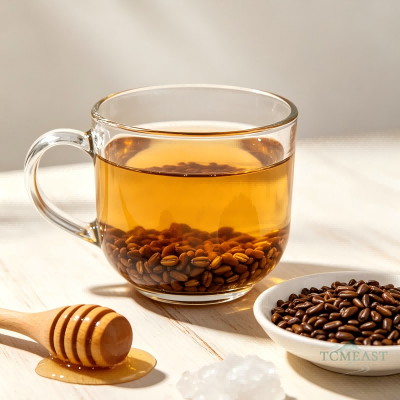
Main Ingredients
- Cassia seeds (Juemingzi) 10-20g
- Boiling water as needed
- Rock sugar or honey to taste
Steps
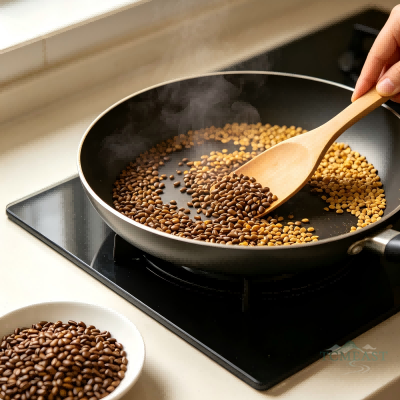
Take 10-20g of raw cassia seeds, selecting plump ones. Heat a dry pan over low heat, add the cassia seeds, and stir-fry over low heat. Stir-fry until the seeds turn slightly yellow and release an aroma, then turn off the heat. Note: Do not burn them – burnt seeds lose their active compounds and become bitter. Remove and let cool. Roasted cassia seeds have a milder cold nature and a richer aroma.
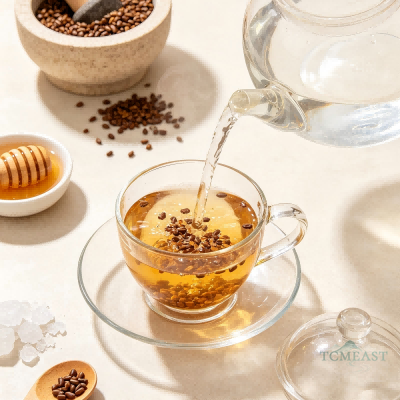
Place the roasted cassia seeds in a cup. Lightly crush them to enhance the release of active compounds. Pour about 200-300ml of freshly boiled water over the seeds. Cover and steep for 10-15 minutes. Add a small amount of rock sugar or honey to taste if desired. Consume 1 dose daily, drinking frequently as tea until the flavor fades. It can generally be re-brewed 3-5 times. Best consumed after meals to reduce stomach irritation.
TCM Notes
Cassia Seeds: Sweet, bitter, and salty in taste, slightly cold in nature; enters the Liver and Large Intestine meridians. Known for clearing heat, improving vision, and moistening the intestines to relieve constipation. Modern pharmacology shows they contain anthraquinone glycosides, chrysophanol, emodin, and other active compounds, with blood pressure-lowering, lipid-lowering, and antibacterial effects. The anthraquinone glycosides have a mild laxative effect. Cassia seeds also help lower blood pressure and alleviate headache and dizziness caused by hypertension. Characteristics: The tea contains virtually no calories and is rich in anthraquinones, flavonoids, and various trace elements – a purging-type medicinal tea. Caffeine-free, so it does not affect sleep even when consumed before bedtime.
Suitable for:Those with hypertension, and headache/dizziness caused by high blood pressure Those with constipation and senile yin-deficiency constipation Those with eye strain, red and painful eyes, blurred vision, and poor eyesight Those with excessive Liver fire, irritability, and easy anger Those with hyperlipidemia and obesity Those with acute conjunctivitis, corneal ulcers, and glaucoma (adjunctive therapy)
Not suitable for:Those with Spleen-Stomach Cold Deficiency – cassia seeds are cold in nature and may damage Spleen yang, causing abdominal pain and diarrhea Those with qi deficiency with loose stools or spleen deficiency with diarrhea Pregnant women – cassia seeds may stimulate uterine smooth muscle contraction, increasing the risk of miscarriage or premature labor Women during menstruation – cassia seeds are cold in nature and may worsen menstrual pain or cause menstrual stasis Those with hypotension – cassia seeds have a clear blood pressure-lowering effect Those with chronic enteritis or chronic diarrhea Those with gastric ulcers – not suitable for long-term or excessive use General population – not suitable for long-term continuous use; prolonged use may cause intestinal lesions or refractory constipation