
Herbal Teas
Mint Tea (Bohe Cha)
Mint Tea is a classic exterior-releasing medicinal tea originating from the Ming Dynasty classic Puji Fang (Prescriptions for Universal Relief). Mint was first recorded in the Han Dynasty Shennong Bencao Jing as the dried above-ground parts of the mint plant (Mentha haplocalyx). The Ming Dynasty Compendium of Materia Medica records: "Mint is pungent and dispersing, cool and clearing, specialized in dispelling wind and heat". Mint is pungent in taste and cool in nature, entering the Lung and Liver meridians. It has the effects of dispersing wind-heat, clearing the head and eyes, relieving sore throat, promoting rash eruption, and soothing the Liver and regulating qi. Brewed as a tea, it can be used as adjunctive therapy for wind-heat colds, early-stage warm diseases, headaches, red eyes, sore throat, mouth ulcers, wind-rash, measles, and chest and rib tightness. Modern research shows that mint has antibacterial, antiviral, anti-inflammatory, antioxidant, and sedative effects. This tea is especially suitable for early-stage wind-heat colds in spring and summer or summer heat with thirst, making it an ideal daily wellness tea for clearing heat and relieving summer heat.
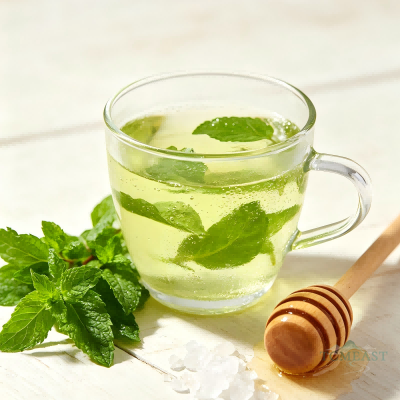
Main Ingredients
- Mint leaves (fresh) 10-20 leaves
- Boiling water 300ml
- Rock sugar or honey to taste
Steps
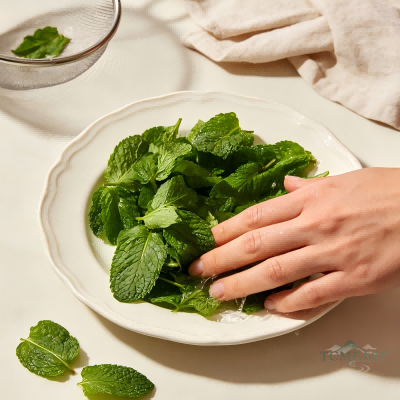
Take 10-20 fresh mint leaves, gently rinse with clean water (do not rub), and drain. Gently pat to release aroma if desired.
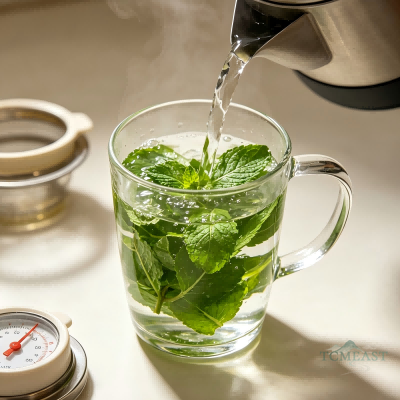
Put the rinsed mint leaves into a teacup. Pour 80-90°C hot water (about 200-300ml) over the leaves. Note: Water temperature should not be too high to avoid destroying volatile oils. Cover and steep for 3-5 minutes.
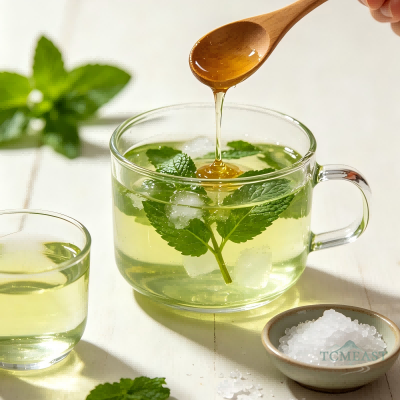
Add a small amount of rock sugar or honey to taste if desired. Consume 1-2 times daily. Can be re-brewed 2-3 times.
TCM Notes
Mint (Bohe) : Pungent in taste, cool in nature; enters the Lung and Liver meridians. Known for dispersing wind-heat, clearing the head and eyes, relieving sore throat, promoting rash eruption, and soothing the Liver and regulating qi. Used for wind-heat colds, early-stage warm diseases, headaches, red eyes, sore throat, mouth ulcers, wind-rash, measles, and chest and rib tightness. Modern pharmacology shows mint contains volatile oils (menthol, menthone, etc.), flavonoids, and polysaccharides. Menthol and menthone have antibacterial, anti-inflammatory, and sedative effects; flavonoids have antioxidant effects that scavenge free radicals and protect cardiovascular health; modern research confirms mint has antiviral, antibacterial, analgesic, and antispasmodic effects. Mint also contains vitamin A, vitamin C, and minerals including potassium and iron. Characteristics: The tea contains virtually no calories and is rich in volatile oils, flavonoids, and various trace elements – an exterior-releasing medicinal tea.
Suitable for:Those with wind-heat colds or early-stage warm diseases (fever, slight chills, headache, sore throat, cough) Those with wind-heat attacking the upper body causing headache, dizziness, red eyes, excessive tearing, sore throat, and mouth ulcers Those with measles not erupting or wind-rash itching due to wind-heat Those with Liver qi stagnation manifesting as chest and rib pain, irritability, and chest tightness Those with summer heat and thirst, needing heat relief General population for daily refreshment and mental clarity
Not suitable for:Those with Spleen-Stomach Cold Deficiency – mint is cool in nature and may damage Spleen yang, causing abdominal pain and diarrhea Pregnant women – absolutely contraindicated; mint may stimulate the uterus and increase miscarriage risk Breastfeeding women – mint may inhibit milk production Those with weak constitution and excessive sweating – mint induces sweating and may worsen symptoms Those with yin deficiency with blood dryness or Liver yang hyperactivity – mint's dispersing nature may further deplete body fluids Those with Lung deficiency cough – mint may worsen the condition Women during menstruation – mint is cool in nature and may worsen menstrual pain Infants and young children – digestive systems are not fully developed Those allergic to mint General population – not suitable for long-term excessive consumption; may damage yang qi