
Desserts
Jujube & Persimmon Cake (Zao Shi Bing)
Jujube & Persimmon Cake is a classic medicinal pastry rooted in traditional Chinese medicine theory. Dried persimmon strengthens the spleen, astringes the intestines, moistens the lungs, and stops bleeding; red jujube tonifies the middle, boosts qi, and nourishes blood; cornus fruit nourishes the liver and kidneys, and consolidates essence. Together, they achieve the effects of strengthening the spleen, nourishing yin, and benefiting the liver. Soft, sweet, and fragrant, this medicinal pastry is especially suitable for conditions such as tinnitus, deafness, dry mouth, poor appetite, and fatigue caused by liver-yin deficiency with deficient fire flaring upward.
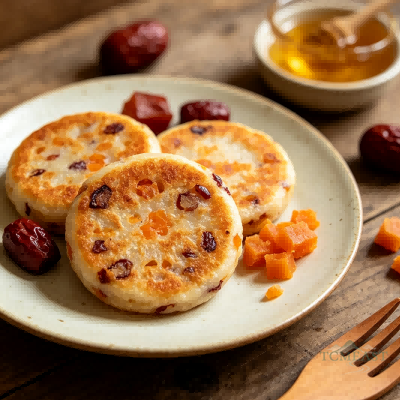
Main Ingredients
- Dried persimmon cake (shibing) 30g
- Red jujube (Chinese dates) 30g
- Cornus officinalis fruit pulp (shanzhuyu) 10g
- White flour 100g
- Cooking oil as needed
Steps
Prepare persimmon: Remove the stem from 30g of dried persimmon and cut into small pieces. Prepare jujube: Wash 30g of red jujube, remove the pits, and break them open. Prepare cornus fruit: Set aside 10g of cornus fruit pulp.
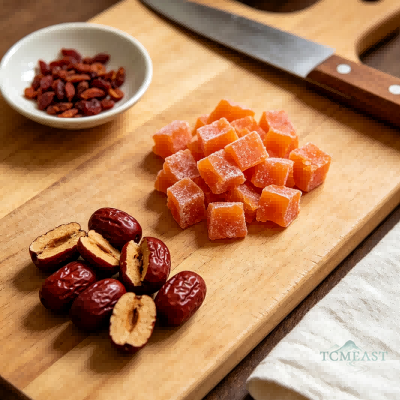
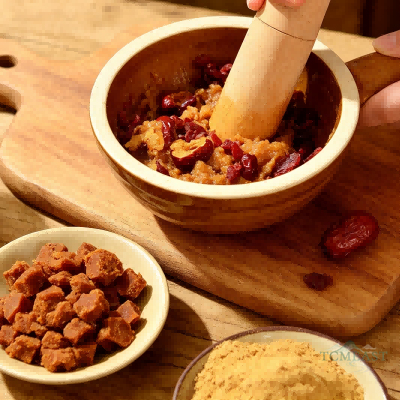
Place the chopped persimmon, jujube, and cornus fruit together in a container and mash into a paste. Mix well, dry, and grind into a fine powder.
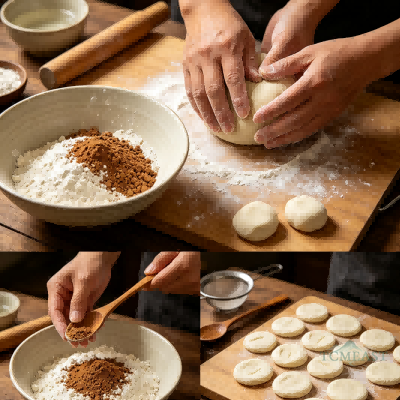
Mix the medicinal powder with 100g of white flour. Add an appropriate amount of water and knead into a dough. Divide into small portions and form into small cakes.
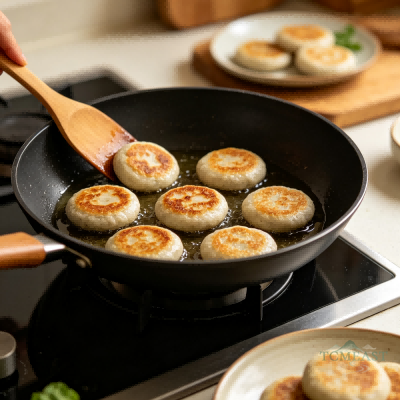
Heat a pan and add an appropriate amount of cooking oil. Place the cakes in the hot oil and pan-fry over low heat until both sides are golden brown and fully cooked. Remove and serve. Serve as a side dish or snack.
TCM Notes
Dried Persimmon (Shibing) : Sweet and astringent in taste, neutral in nature. Known for moistening the lungs, resolving phlegm, strengthening the spleen, astringing the intestines, and stopping bleeding. Used for dry cough with phlegm, spleen deficiency with poor appetite, diarrhea, and bloody stools. Rich in dietary fiber that promotes intestinal motility, but high in sugar content. Red Jujube (Chinese Date) : Sweet in taste, warm in nature; enters the Spleen and Stomach meridians. Known for tonifying the middle, boosting qi, and nourishing blood. Rich in protein, carbohydrates, organic acids, vitamins A and C, and various trace elements. Cornus Fruit (Shanzhuyu) : Sour and astringent in taste, slightly warm in nature; enters the Liver and Kidney meridians. Known for nourishing the liver and kidneys, and consolidating essence. Used for lumbar soreness, weak knees, dizziness, tinnitus, and impotence. Synergistic Effect: Dried persimmon strengthens the spleen and astringes the intestines; red jujube tonifies qi and nourishes blood; cornus fruit nourishes the liver and kidneys. Together, they regulate the liver, spleen, and kidneys, achieving the effects of strengthening the spleen, nourishing yin, and benefiting the liver. Total approx. 400-500 kcal per serving (depending on oil usage), primarily carbohydrates – a warming medicinal pastry.
Suitable for:Those with liver-yin deficiency and deficient fire flaring upward, manifesting as tinnitus, deafness, and dizziness Those with dry mouth, poor appetite, and fatigue Those with spleen deficiency, poor appetite, and loose stools Those needing to nourish yin, moisten the lungs, strengthen the spleen, and nourish blood Middle-aged and elderly for daily wellness
Not suitable for:Diabetes patients – dried persimmon and jujube are high in sugar, which may spike blood glucose Those with spleen deficiency diarrhea or loose stools – persimmon is cold and astringent; excess may worsen diarrhea Those with externally-contracted wind-cold or colds/fever – avoid tonics during illness Postpartum or post-illness individuals – consume with caution Those with chronic gastritis or gastric motility disorders – persimmon contains tannins that may irritate the gastric lining Post-gastrectomy patients – avoid persimmon products Those with anemia – avoid excessive consumption Those allergic to any ingredient – avoid completely