Wisdom of TCM
Gua Sha for Beginners: Tools, Technique and Skin Benefits
Learn what gua sha is, how to choose a tool, how to perform a safe face and body routine, and what those temporary marks really mean. A practical beginner's guide.
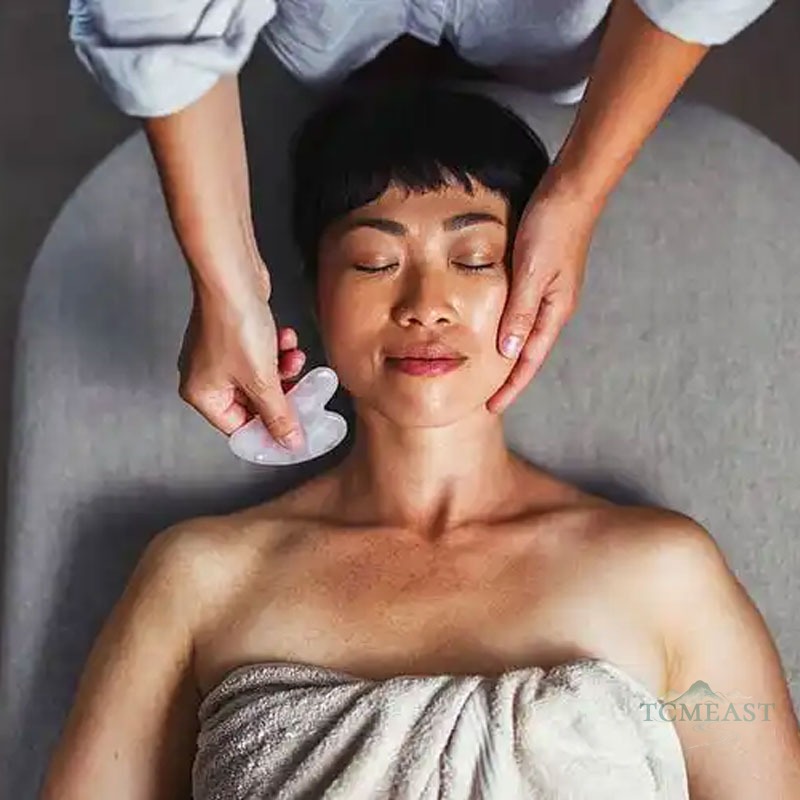
A Personal NoteGua sha has become a social-media favorite, and most of what you see online is the facial version: a pretty stone gliding over a serumed face. That is real, but it is only half the story. The original practice uses a rounded tool to deliberately scrape the skin on the neck, back, and limbs, creating temporary red marks that reveal where blood and qi are stuck. Done well, gua sha is one of the simplest self-care techniques in TCM: it moves blood, softens tissue, and gives you immediate feedback about your own body.
What Gua Sha Is
Gua sha (刮痧) translates literally as "scraping sha," where sha refers to the reddish petechiae-like marks that rise to the surface. A smooth-edged tool is pressed against oiled skin and stroked in one direction along muscles or meridians. The pressure is firm but not painful, and the marks fade over a few days.
The purpose is to move blood and qi that have stagnated in the superficial tissues. This is why gua sha is used for:
- Stiff neck and shoulders
- Headaches and tension at the base of the skull
- Muscle soreness after exercise
- Upper back tightness
- Early heat-related discomfort
- Facial puffiness and sluggish-looking skin (the gentle facial version)
Choosing a Tool
Almost any smooth, rounded edge can work, but the best tools are easy to hold and glide:
- Jade or rose quartz: classic facial stones, smooth and cool
- Horn: traditional in Chinese practice, warm to the touch, often used for the body
- Stainless steel: durable, easy to sanitize, increasingly common in clinics
- Silicone: gentle and safe for beginners and sensitive skin
For facial gua sha, choose a small heart-shaped or curved stone that fits the contours of the face. For the body, a larger tool with a broad edge covers more surface. Avoid sharp or rough edges, and wash the tool before and after each use.
Facial Gua Sha Technique
Facial gua sha is gentle. The goal is lymphatic drainage and relaxation, not marks.
- Cleanse the face and apply a generous layer of facial oil or serum so the stone glides without dragging.
- Hold the stone at a 15-30 degree angle against the skin.
- Work from the center of the face outward: jaw to ear, cheekbone to ear, brow to temple, down the neck from jaw to collarbone.
- Repeat each stroke 3-5 times with light pressure.
- Finish by sweeping down the sides of the neck.
Use light pressure on the face. Redness after facial gua sha should disappear within minutes. If it lasts, you are pressing too hard.
Body Gua Sha Technique
Body gua sha uses more pressure and is performed on oiled skin, usually the neck, shoulders, back, or legs.
- Apply massage oil or lotion generously.
- Start with the neck and shoulders: stroke downward from the base of the skull toward the shoulders, and from the neck toward the collarbone.
- On the upper back, stroke outward from the spine.
- On the arms and legs, always stroke toward the heart.
- Use even, one-directional strokes, about 10-15 per area.
- Stop when marks appear or after a few minutes; there is no benefit to forcing more.
What the Marks Mean
The red marks of body gua sha are superficial blood moving into the skin. They usually appear within minutes and fade over 2-5 days.
- Light red: mild stagnation
- Dark red or purple: more congested tissue
- No marks: healthy flow or insufficient pressure
Marks are not burns and should not hurt. If you feel stinging, the pressure is too high or the tool has a rough edge. Avoid gua sha on broken skin, varicose veins, active rashes, or the abdomen during pregnancy.
A Realistic Routine
For facial benefits, 3-5 minutes, 3-4 times a week is plenty. For body tension, a 10-minute session 1-2 times a week is enough. Drink water afterward, keep the area warm, and avoid scrubbing the skin for a day or two. Gua sha works best as part of a larger routine: better posture, more movement, and attention to stress. The marks tell you where the body has been holding; the daily habits decide whether it keeps holding.
For educational purposes only. Stop if you feel pain, and consult a professional for serious or persistent symptoms.