Demystifying TCM
TCM Health Views Guiding Health Preservation
The TCM health view, originating from the Huangdi Neijing, establishes four core concepts: “unity of man and nature” (adapting to seasonal rhythms), “unity of body and spirit” (integrating physical and mental health), “yin and yang in equilibrium” (maintaining homeostatic balance), and “zheng qi as foundation” (strengthening disease resistance and recovery). Together, these form the complete theoretical framework through which Chinese medicine understands health and guides health preservation, remaining highly relevant to daily wellness and disease prevention today.
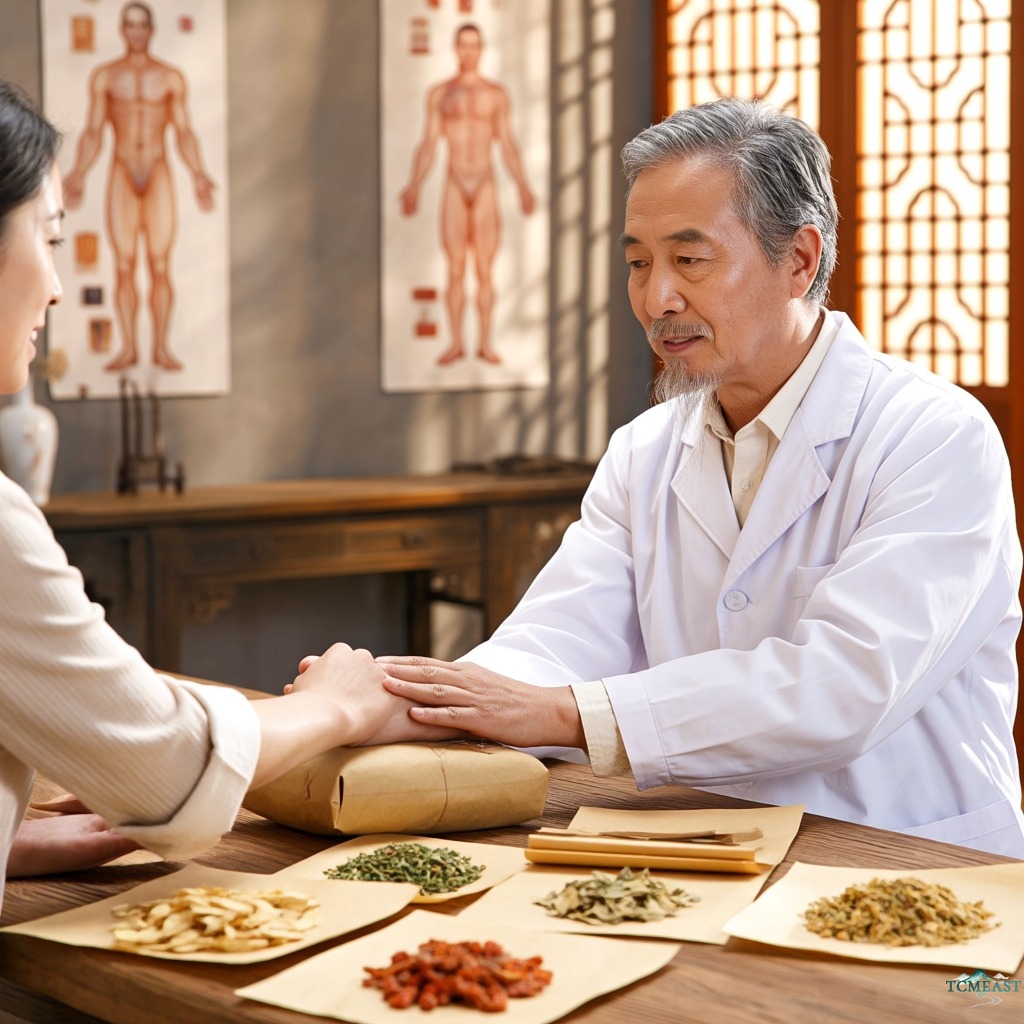
The health views of Chinese medicine were already established as early as the Huangdi Neijing (Yellow Emperor's Inner Canon), namely: the health view of “the unity of man and nature” (tian ren he yi), the health view of “the unity of body and spirit” (xing shen he yi), the health view of “yin and yang in peaceful equilibrium” (yin ping yang mi), and the health view of “zheng qi as the foundation” (zheng qi wei ben). Furthermore, the Huangdi Neijing regarded the condition of the hair, teeth, and flesh as important markers for assessing the state of health. The main contents of TCM theory — from disease causes and mechanisms, to diagnostic methods and pattern differentiation, to health preservation and disease prevention, as well as various theories such as visceral manifestation and meridians — are all, almost without exception, developed around Chinese medicine's understanding of the concept of health. Understanding the TCM health view can well guide our daily health care and cultivation.
The Health View of “The Unity of Man and Nature”
The concept of “the unity of man and nature” in Chinese medicine originates from ancient Chinese philosophy. It means that human beings live between heaven and earth, within the cosmos, and that all their activities are intimately interconnected with the natural world — this is the idea of “the unity of man and nature.” Chinese medicine holds that the human body possesses its own laws of life activity and has a mutually communicating and corresponding relationship with the natural world. Whether it is the movements of the sun and moon, the geographical environment, or the climate of the four seasons and the alternations of day and night, all such changes can exert important influences on human physiology and pathology. For example, the seasonal climatic changes of the natural world can directly affect human emotions, qi and blood, the zang-fu organs, and the occurrence of disease. Under the guidance of this thought, TCM health cultivation holds that human beings must grasp and understand the patterns of seasonal climatic change and the characteristics of different natural environments, comply with nature, and maintain the harmonious unity of the human body with the natural environment, in order to cultivate health and prevent disease.
The Health View of “The Unity of Body and Spirit”
The TCM theory of “the unity of body and spirit” comes from the Huangdi Neijing, and this theory has always been established on the foundation of objective physiological structure. First, from the perspective of the origin of life, the physical form exists first, and then the spirit is born — that is, it is held that first there is life and the physical body, and only then does psychological activity arise. The view of the unity of body and spirit holds that the spirit (shen) is the master of the physical form (xing), while the physical form is the material basis of the spirit; the two are at once opposites and a unity. Here, “form” refers to the soma, the physical body; “spirit” refers to thought, the mind. Chinese medicine's proposition of “the unity of body and spirit” is precisely to emphasize the intimate connection between the physical and the mental. Only when the human body and the spirit are closely integrated — that is, when form and spirit exist together and are united — can health be maintained and promoted. Studies have shown that conditions such as hypertension, coronary heart disease, and diabetes are closely related to emotional irritability and psychological imbalance, while an open and cheerful disposition and a calm, balanced mindset are the very foundation of health and longevity — which coincides perfectly with the TCM concept of “the unity of body and spirit.”
The Health View of “Yin and Yang in Peaceful Equilibrium”
Yin and yang are generalizations of the attributes of mutually related opposites among things or phenomena in the universe. Yin and yang respectively represent certain qualitative material and functional attributes: for instance, within the human body, qi is yang, blood is yin; excitation is yang, inhibition is yin. “Ping” means normal or balanced; “mi” means securely guarded, firmly consolidated. “Yin ping yang mi” indicates that yin and yang are each in a normal state individually, and also maintain a relationship of mutual coordination and cooperation. As a condition of human health, “yin ping yang mi” is embodied in different aspects and at different levels of life activity, such as acid-base balance, blood glucose balance, and metabolic balance. Furthermore, “yin ping yang mi” is also manifested as a kind of ordered steady state of human activity, which is similar to what modern science refers to as “homeostasis.” “Homeostasis” refers to the tendency of the human body to maintain a balanced state physiologically. For example, the body's temperature, blood pressure, blood pH, and blood glucose concentration are all regulated by homeostatic mechanisms. If our body attains this steady state, then it is in a condition of health.
The Health View of “Zheng Qi as the Foundation”
In Chinese medicine, zheng qi is defined in relation to xie qi (pathogenic factors). It refers to the functional activities of the human body and its ability to adapt to the external environment, resist disease, and recover from illness. Chinese medicine holds that the fundamental cause of disease occurrence and premature aging lies in the deficiency and debilitation of the body's zheng qi. When zheng qi is ample, the body's yin and yang are coordinated, qi and blood are abundant, and the functions of the zang-fu organs are normal; the body can resist external pathogens and avoid falling ill. When zheng qi is insufficient, pathogenic factors readily damage the body, the body's functions become disordered, and disease arises. When pathogenic factors invade, if the pathogen is too weak to contend with the body's zheng qi, it will be expelled, eliminated, or temporarily lie latent within the body without causing illness. Only when the pathogenic factors are relatively strong and can struggle with zheng qi to provoke a relatively strong reaction does the human body manifest a pattern (symptoms, signs, etc.), which constitutes the onset of disease.