
Body & Nature
Acupuncture Therapy
Acupuncture therapy, guided by TCM theory, uses filiform needles to stimulate acupoints for disease prevention and treatment, characterized by broad indications, ease of operation, and economic safety. This article systematically presents the complete procedural standards from needle selection, patient positioning, and point disinfection to insertion techniques (pinching, stretching, lifting-pinching), manipulation and retention, and withdrawal, along with a detailed list of contraindications and the prevention and management of abnormal events such as needle fainting, stuck needles, and bent needles — a practical guide to standardized needling practice.
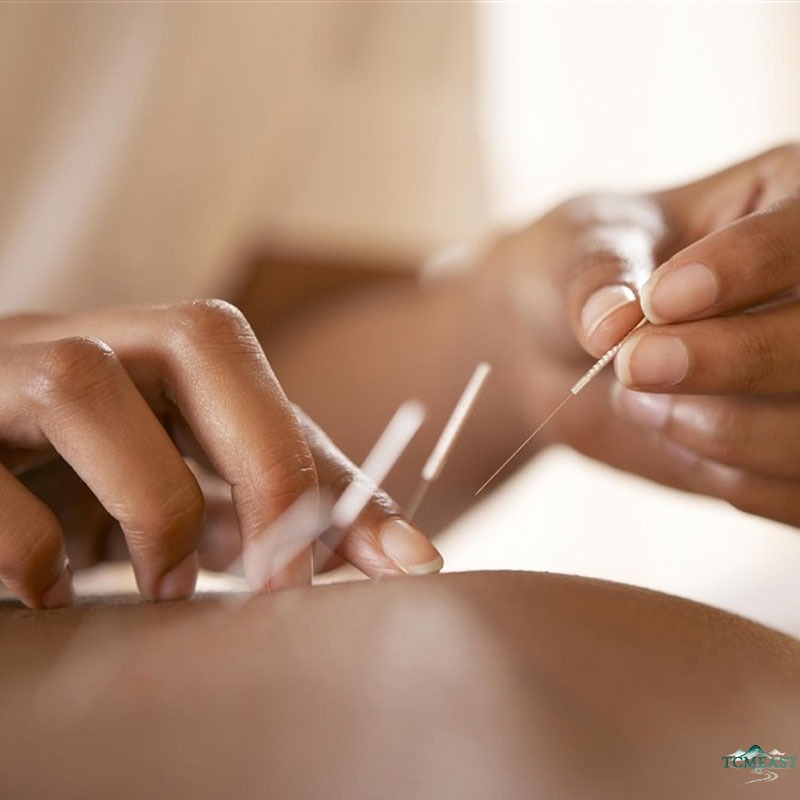
Acupuncture therapy is a method of preventing and treating disease by applying needling techniques under the guidance of Chinese medical theory. Acupuncture therapy possesses the advantages of broad indications, clearly evident therapeutic efficacy, convenient operation, and economic safety, and is well received by the broad masses of people and patients.
I. Selection of Needles
Needles should be selected for their appropriate degree of hardness, elasticity, and toughness. Clinically, there are three types: gold, silver, and stainless steel. Gold and silver needles have relatively poor elasticity and are expensive, so they are less commonly used. In clinical practice, stainless steel needles are the most frequently employed. Needles should be chosen with a length and thickness appropriate to the patient's sex, age, body size — whether stout or thin — constitutional strength, the deficiency or excess nature of the disease, the depth — whether superficial or deep — of the diseased area, and the specific location of the acupoints to be needled. For example, for male patients who are physically strong and stout, and whose disease site is relatively deep, a slightly thicker and longer filiform needle may be selected. Conversely, for female patients who are constitutionally weak and thin, and whose disease site is relatively superficial, a shorter, finer needle should be chosen. As for selecting needles based on the specific location of acupoints, generally, in areas where the skin and muscle are thin and needling is shallow, the needle chosen should be short and the needle body fine. For areas where the skin and muscle are thick and needling is deep, a filiform needle with a slightly longer and slightly thicker body should be chosen. Clinically, when selecting a needle, it is appropriate that after the needle is inserted to the required depth, a portion of the needle body still remains exposed above the skin. For instance, if the required insertion depth is 0.5 cun, a 1.0 cun needle may be selected; if the required depth is 1.0 cun, a 1.5–2.0 cun needle may be selected.
II. Selection of Patient Position
Whether the patient's position during needling is appropriately chosen has a significant impact on the correct location of acupoints, the performance of needling manipulation, the retention of needles for the required duration, and the prevention of needle fainting (yün zhen), stuck needles (zhi zhen), bent needles (wan zhen), and even broken needles. For patients who are seriously ill and weak, or who are emotionally nervous, adopting a sitting position tends to tire the patient and often predisposes to needle fainting. Furthermore, if the position is improperly chosen, the patient may shift position during needling or retention, causing bent or stuck needles, and even leading to the accident of a broken needle. Therefore, the principle is to select an appropriate position based on the disease condition and the location of the acupoints to be needled — a position that facilitates the correct location of acupoints, enables convenient needling manipulation and relatively prolonged retention, and does not cause fatigue. The commonly used clinical positions for needling are as follows:
- Supine Position: Suitable for accessing acupoints on the head, face, chest, and abdomen, as well as some acupoints on the upper and lower limbs.
- Lateral Recumbent Position: Suitable for accessing acupoints on the lateral aspect of the body along the Shaoyang meridian and some acupoints on the upper and lower limbs.
- Prone Position: Suitable for accessing acupoints on the head, nape, back, lumbar and sacral regions, as well as acupoints on the dorsal aspect of the lower limbs and some acupoints on the upper limbs.
- Supine Sitting Position (leaning back): Suitable for accessing acupoints on the anterior head, face, and anterior neck.
- Prone Sitting Position (bending forward): Suitable for accessing acupoints on the posterior head, nape, and back.
- Lateral Sitting Position (leaning to one side): Suitable for accessing acupoints on one side of the head, the cheek, and the area around the ear.
III. Disinfection
Disinfection must be thoroughly carried out before needling, including disinfection of the needles, disinfection of the acupoint areas, and disinfection of the practitioner's fingers. The methods of disinfection are as follows:
- Disinfection of Needles: When conditions permit, steam sterilizers may be used, or 75% alcohol may be used for disinfection. For the latter, needles are placed in 75% alcohol and soaked for 30 minutes, then removed and dried for use. Instruments for holding needles, forceps, and the like can be soaked in 2% Lysol solution or a 1:1000 mercuric chloride solution for 1–2 hours before use. Needles that have been used on patients with certain infectious diseases must be set aside separately and strictly sterilized before reuse.
Disinfection of Acupoints and the Practitioner's Fingers: When disinfecting the acupoint area to be needled, a cotton ball with 75% alcohol can be used to wipe and clean it. The wiping should proceed from the center of the acupoint outward in a circular motion. Alternatively, the area may first be wiped with a cotton ball of 2.5% iodine tincture, followed by a cotton ball of 75% alcohol for disinfection. Once an acupoint has been disinfected, it must on no account come into contact with any unclean object, to avoid recontamination.
For the disinfection of the practitioner's fingers: Before performing the procedure, the practitioner should first wash the hands thoroughly with soap and water, and after they are dry, wipe them with a cotton ball of 75% alcohol. During the procedure, the practitioner should try to avoid direct contact between the fingers and the needle body. If contact with the needle body is unavoidable, a sterile dry cotton ball can be used as an intervening barrier to maintain the sterility of the needle body.
IV. Needle Insertion
When performing needling operations, both hands should generally work in a coordinated and closely cooperative manner. The left hand uses the nails to press and incise the area to be needled or assists with the needle body; hence, the left hand is called the "pressing hand." The right hand holds and manipulates the needle, primarily using the thumb, index, and middle fingers to grasp the needle handle — much like holding a writing brush — and thus the right hand is termed the "needling hand."
The function of the needling hand is to hold the needle and carry out the manipulation techniques. When inserting the needle, the finger force is conveyed to the needle tip to pierce the skin. When manipulating the needle, it facilitates twisting left and right, lifting and thrusting up and down, or flicking, vibrating, scraping, and plucking techniques, as well as the manipulation for withdrawing the needle.
Needle Insertion Methods:
- Pinching Insertion Method (also called the fingernail-pressing insertion method): This method uses the thumb and index finger of the left hand to hold a sterile dry cotton ball, grasping the lower end of the needle body, and fixing the needle tip at the skin surface position of the acupoint to be needled. The right hand twists the needle handle to insert the needle into the acupoint. This method is suitable for inserting long needles.
- Stretching Insertion Method: This method uses the thumb and index finger of the left hand to stretch and spread the skin of the acupoint area to both sides, making the skin taut. The right hand holds the needle and inserts it between the thumb and index finger of the left hand. This method is mainly used for acupoints in areas with loose skin.
- Lifting and Pinching Insertion Method: This method uses the thumb and index finger of the left hand to pinch up the skin at the acupoint site to be needled. The right hand holds the needle and inserts it from the upper end of the pinched skin. This method is mainly used for needling acupoints in areas with thin skin and flesh, such as the Yintang acupoint.
V. Retaining the Needle
After the needle has been inserted into the acupoint and manipulation has been performed, allowing the needle to remain in the point is called retaining the needle. The purpose of retaining the needle is to strengthen the effects of needling and to facilitate the continued performance of needling manipulation. In general, for common conditions, once the needling sensation (de qi) has been obtained and an appropriate tonifying or draining manipulation has been applied, the needle may be immediately withdrawn or retained for 10–20 minutes. However, for some specific conditions — such as acute abdominal pain, tetanus with opisthotonos, intractable and severe pain of a cold nature, or spasmodic disorders — the needle retention time may be appropriately extended, sometimes up to several hours, so that intermittent manipulation can be performed during the retention period to enhance and consolidate the therapeutic effect.
VI. Withdrawing the Needle
Withdrawal can take place after the manipulation has been completed or the needle has been retained. When withdrawing, generally, the left thumb and index finger first press on the skin around the needle hole, while the right hand holds the needle and gives it a slight twist. The needle is slowly lifted to the subcutaneous level, then withdrawn, and a sterile dry cotton ball is pressed and massaged over the needle hole to prevent bleeding. If using the "eliminating disease" or "opening-closing" tonifying and draining methods, the needle should be withdrawn according to the specific procedural requirements of each. After the needle is withdrawn, the patient should rest for a moment before moving about, and the practitioner should check the needle count to prevent any from being left behind.
Contraindications and Precautions:
I. Contraindications
- Needling is prohibited for patients in a state of extreme hunger, after gorging oneself or heavy alcohol consumption, or when excessively emotionally stressed.
- Needling is prohibited on the lower abdomen, lumbosacral region, perineal region, and other parts of the body of pregnant women, as well as on acupoints that have the function of promoting the flow of qi and blood and produce a strong needling sensation (such as Hegu, Zusanli, Fengchi, Huantiao, Sanyinjiao, Xuehai, etc.). Needling is prohibited during menstruation.
- Patients with severe allergic or infectious skin diseases, and those with bleeding disorders (such as thrombocytopenic purpura, hemophilia, etc.).
- Needling on the top of the head is prohibited for infants and young children whose fontanelles have not yet closed.
- Direct or deep needling should be avoided in areas where vital organs are located, such as the hypochondriac region, back, renal region, and hepatic region. For acupoints located where major blood vessels course or subcutaneous veins are situated, the needle should be inserted obliquely to avoid puncturing the vessels.
- For children, and during the active stages of tetanus, epilepsy, and manic episodes of schizophrenia, needles should not be retained.
II. Precautions
During acupuncture treatment, the following abnormal situations may arise due to various reasons, such as insufficient psychological preparation on the part of the patient, and should be promptly managed:
- Needle Fainting (Yün Zhen): Needle fainting is a relatively common abnormal occurrence during needling treatment. It is primarily due to the patient's inadequate psychological preparation and excessive nervousness about needling, or the patient being in a weakened state — hungry or fatigued — before treatment, or the patient's posture being uncomfortable, or the practitioner's needling technique being unskilled. If the patient, during needling or needle retention, suddenly develops symptoms such as dizziness, nausea, palpitations, a pale complexion, and cold sweating, needling should be immediately discontinued, all retained needles withdrawn, and the patient placed in a supine position with eyes closed to rest, and given a small amount of warm boiled water to drink. The surrounding environment should be kept quiet. If symptoms are relatively severe, acupoints such as Renzhong, Neiguan, Zusanli, and Suliao can be needled to promote recovery. If there is no response to the above measures and signs such as weakened heartbeat, faint respiration, and a thin, weak pulse appear, appropriate emergency measures should be taken.
To prevent needle fainting, before needling, the patient should be informed of the role of acupuncture therapy and the possible needling sensations to dispel any fear. For patients who are excessively hungry or constitutionally very weak, a small amount of water should be given before needling. For those who have just performed heavy physical labor, they should be allowed to rest for a while before needling.
- Stuck Needle (Zhi Zhen): During needle manipulation or withdrawal, if the practitioner feels a sensation of roughness, tugging, and wrapping around the needle body within the acupoint, this is called a stuck needle. A stuck needle makes it difficult to lift, thrust, twist, or withdraw the needle. The main cause of a stuck needle is improper needling technique, which triggers a strong tonic contraction of the muscles at the needling site, causing muscle fibers to wrap around the needle body. Once a stuck needle occurs, forceful manipulation or withdrawal should not be attempted. The patient should be instructed to relax the whole body, and the needling site should be massaged by hand to relax the local muscles. Then, the needle body should be gently twisted in the direction opposite to the original manipulation, and the needle body gently lifted and slowly withdrawn.
To prevent stuck needles, the procedure should be well explained to the patient before needling so that the patient does not become tense. The needle body should also be cleaned before needling; needles that are not smooth, or that have rust spots or are bent, must not be used. If a local muscle spasm during needling causes a shift in the patient's position, the practitioner's hand must not leave the needle handle. At this point, the left hand can massage the needling area while slowly helping the patient return to the original position, gently twisting the needle body and simultaneously withdrawing it outward. The needle should not be retained. Additionally, during manipulation, care should be taken not to twist the needle body excessively in a single direction, to avoid stuck needles during manipulation.
- Bent Needle (Wan Zhen): A needle that is bent either subcutaneously or externally is called a bent needle. External bending is often caused by the retained needle being pressed or twisted by other objects. When withdrawing, the practitioner should use a hand or forceps to grasp the needle body below the bend and slowly withdraw it. Subcutaneous bending is often discovered during needle manipulation and is caused by the patient changing position during retention or manipulation, or by muscle spasm, which bends the needle lodged in a joint cavity, between bone surfaces, or between two opposing muscle groups. Another cause is inaccurate acupoint selection or excessively heavy and forceful manipulation, which can bend the needle tip or hook it on bone tissue. If a bent needle is discovered subcutaneously upon withdrawal, the patient should first be asked to slowly return the displaced limb to its original position.